
Start here
Key Takeaways
- Camping festival gear falls into seven core categories: shelter, sleep, lighting and power, food and hydration, transport, weather and security, and leave-no-trace supplies. Covering each category prevents the kind of oversight that ruins an otherwise great weekend.
- You do not need to buy everything at once. Start with a durable tent, real shade, a proper sleep system, and a way to charge your phone. Add comfort and fun items once the essentials feel solid.
- Different camping festivals enforce very different rules on stoves, glass, canopy size, generators, and even power bank capacity. Always check each event’s official prohibited-items list before you pack.
- This hub links out to deeper guides — including a complete music festival packing list, best camping tents for festivals, and best portable chargers for festivals — so you can refine your own packing list without guessing.
VewTopia may earn a commission if you book through links on this page, at no extra cost to you.
Before you pack
How to Use This Camping Festival Gear Hub
This page is a starting point for planning your camping gear, not a one-size-fits-all shopping list. Each section summarizes what matters most in a category and then points you toward a more detailed guide where you can compare specific products and specs.
The focus here is multi-day camping at established music festival sites — think car-camping zones with marked plots, portable toilets, and water stations. This is not a backcountry guide and not aimed at single-night shows.
Festival camping differs from regular camping in important ways. You deal with more walking, more dust and mud, louder nights, tighter campsite spacing, and strict event rules about camp stoves, glass, generators, and open flames. Building your camping festival gear in layers helps: start with must-have safety and comfort items, then add nice-to-have fun stuff like glow sticks or an inflatable couch as space and budget allow.
Tents, shade and layout
Shelter and Campsite
At most camping festivals, durable shelter and smart layout matter far more than ultralight backpacking specs. Your tent will sit in one spot for days, often baking in direct sun, so ventilation, easy setup, and enough interior space to actually change clothes are the priorities.
Choosing a festival tent
Size up. A 6-person tent fits 3 adults and their gear comfortably, and a 4-person tent works well for a couple who wants room to spread out. Look for large mesh windows, a full rain fly made from water resistant materials with taped seams, and a hydrostatic head rating of at least 1,500 mm for light-to-moderate rain. Instant pop-up tents are best for quick setup if you arrive late or want minimal fuss. For a deeper comparison of weight, ventilation, and waterproofing, see our best camping tents for festivals guide.
Recommended gear
Festival tent comparison module
6-person and 4-person tents with 1,500 mm+ hydrostatic head ratings, large mesh windows, and taped seams — ranked in our best camping tents for festivals guide.
Shade structures
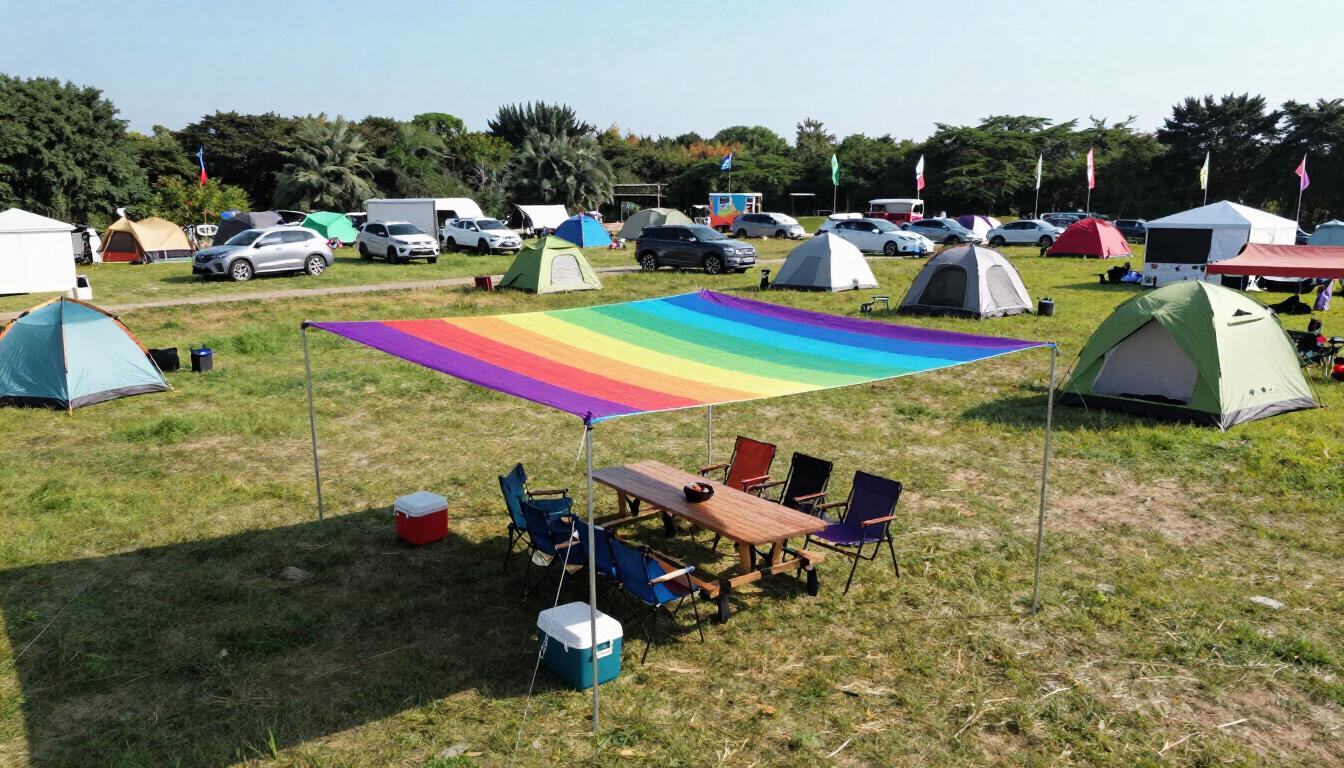
A 10x10 straight-leg canopy provides 100 square feet of shade — enough for a small group to eat, hang out, and escape the afternoon sun. Add removable sidewalls or a tarp on the sun-facing side. Use heavy-duty stakes and guy lines to secure the canopy against wind.
Campsite layout tips
- Place your tent downwind from your cooking area to keep smoke and food smells away from bedding.
- Set up a communal shade space in the middle of your plot with a rug or tarp as a “living room.”
- Keep a clear path to the festival entrance so nobody trips over stakes at night.
A folding table organizes food prep and prevents ground mess. A couple of sturdy camp chairs, an outdoor rug to cut dust, and a simple doormat for boots round out the extras that transform comfort.
Rule gotchas: Many festivals ban glass, restrict staking into hard surfaces, and cap canopy footprint size. Check the camping rules for your specific event before buying oversized shade structures.
How to actually rest
Sleep System
Sleep is what separates a great weekend from a miserable one. Just a sleeping bag on the floor rarely works when you are on loud, late-night festival grounds with morning sun turning your tent into an oven.
Core components
A comfortable sleep setup is prioritized for camping festivals. At minimum, you need:
- An insulated sleeping pad or air mattress to separate you from cold, hard ground. An air mattress offers more cushion but is bulkier; a foam sleeping pad is lighter but less plush. For car camping, the bulk tradeoff usually favors the air mattress.
- A temperature-appropriate sleeping bag or camp comforter. Even warm days can produce cold nights, especially at elevation. Bring extra blankets if you sleep cold.
- At least one real pillow per person — inflatable with a removable cover works, or just bring one from home.
Recommended gear
Sleeping pads and camp pillows
Top-rated insulated sleeping pads, air mattresses, and packable camp pillows compared for warmth, bulk, and durability.
Sleep accessories that improve sleep quality
- High-quality earplugs are essential for hearing protection at festivals and for blocking camp noise so you can actually rest.
- An eye mask blocks morning light if your tent lacks blackout panels.
- Bring warm pajamas and a hoodie to help you stay warm during cold nights at camp.
Blackout and heat control
Reflective flysheets and blackout tent materials can block roughly 90 percent of sunlight, keeping your tent cooler in the morning and darker for sleeping in. A reflective emergency blanket draped over the fly is a cheap alternative.
First festival mistakes to avoid: underestimating night temperatures, forgetting a groundsheet under the tent, and trusting a dollar-store inflatable that deflates halfway through the night. Test everything at home first.
Headlamps, camp lights and phone charging
Lighting and Power
Once the headliners end and you are walking back through dark paths to your campsite, having your own light and power makes a huge difference for safety and convenience.
Essential lighting
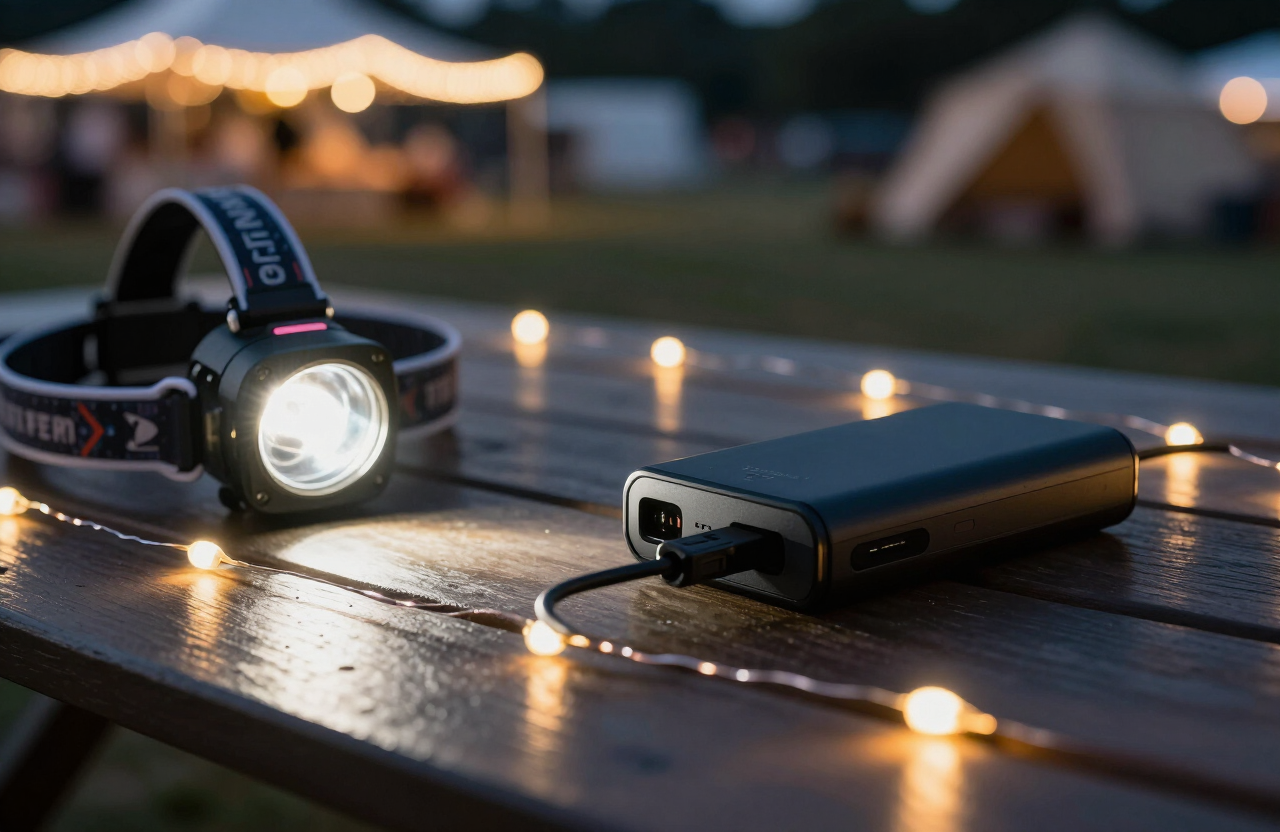
- At least one hands-free headlamp per person.
- A simple battery lantern inside the tent.
- Solar-powered LED string lights improve campsite visibility at night and help you spot your camp from a distance.
Glow sticks and LED bracelets serve as both vibe and safety gear. They help friends find one another in big crowds near the main stage and improve visibility on dark paths.
Power strategy for a 3–4 day festival
Portable power banks are necessary for keeping devices charged during festivals. The standard recommendation is 20,000–25,000 mAh per person for a multi-day camping music festival. Many experienced attendees carry two portable chargers: a smaller 10,000 mAh bank for daily carry and a larger one back at camp for overnight charging.
Extend battery life with airplane mode at night, offline maps, and downloading tickets before arrival. Short cables reduce clutter.
Link to our best portable chargers for festivals guide for specific capacity ranges and durability ratings.
Recommended gear
Portable power bank lineup
Daily-carry 10,000 mAh banks and camp-side 20,000\u201325,000 mAh units, ranked in our best portable chargers for festivals guide.
Restrictions to know: Generators are often banned or restricted to specific car-camping zones. Some events discourage loose lithium batteries. Charging lockers exist at some festivals but tend to sell out or cost extra. Always verify rules before packing power gear.
Coolers, meal prep and water rules
Food and Hydration
Planning simple, realistic meal prep and a hydration plan saves money and keeps you feeling good through long days in the sun. You do not need a gourmet kitchen — you need reliable cold storage, easy food, and enough drinking water.
Cooler strategy
Hard-sided coolers keep ice longer than soft-sided ones, but soft coolers fold flat for easier transport. Pre-chill your cooler the night before, use block ice plus frozen water bottles for temperature control, and keep the cooler in shade whenever possible.
Recommended gear
Hard-sided cooler and hydration pack
A long-hold hard-sided cooler paired with a 2-liter hydration pack for the venue — both reviewed for ice retention and comfort.
Simple camp meals
- Pre-made wraps, pasta or grain salads, instant oatmeal, cut fruit and vegetables.
- Snacks like nuts and granola bars that survive if the cooler warms up.
- Portable coffee makers enhance morning routines at camp and save you from long vendor lines each morning.
Cooking rules
Many festivals limit camp stove use to small propane or butane units and ban open flames or charcoal entirely. A two-burner camp stove simplifies meal prep for groups, but check each event’s official policy before packing any stove or fuel. A folding table helps keep food prep organized at camp and off the ground.
Hydration setup
Maintaining hydration is essential, particularly in hot weather. A large water bottle and a 5-liter or larger jerry can are essential for your campsite so you always have drinking water on hand. Inside the venue, a hydration pack should have at least a 2-liter bladder to avoid constant refill trips. A collapsible water bottle is easy to carry at festivals when you want something lighter.
Reusable water bottles reduce the need for single-use plastics, and many festivals offer free potable water for refills at stations around the festival grounds. Electrolyte packets like Liquid IV help replenish electrolytes lost through sweat — drinking plenty of more water with added electrolytes beats plain water alone on hot days.
Reminder: some festivals only allow empty bottles at entry and rely on inside refill stations. Read your event’s allowed-items page before you go.
From home to campsite
Transporting Gear
Getting camping gear from your home to the event, and then from the parking lot to your campsite, is often the hardest physical step for a first festival. Plan this part as carefully as you plan the fun stuff.
Packing for the drive
Use large duffel bags or wheeled totes for bulky gear. Pack a lightweight daypack separately for valuables and daily essentials — it is useful for carrying your phone, sunscreen, water bottle, and wallet into the venue each day. Smaller organizers or packing cubes keep outfits, toiletries, and electronics easy to find.
From parking lot to campsite
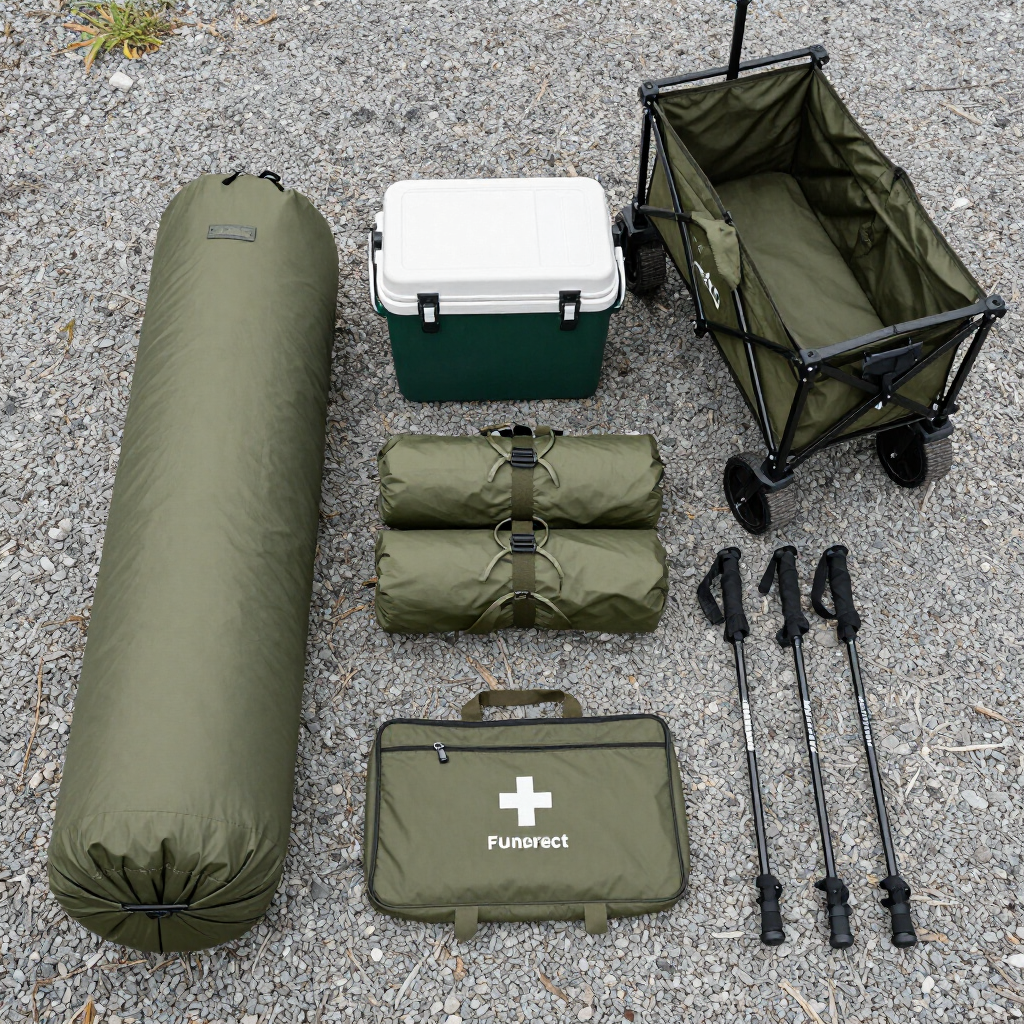
A folding wagon helps transport gear efficiently at camping festivals, especially when the walk is long and the ground is uneven. Strap tents and canopies together so they are easier to carry in one load. Pack heavy items low and centered in any cart or wagon to save space and prevent tipping.
Flying to a festival
Air travel changes your camping gear choices significantly. Rent or borrow big items like canopies at the destination, ship a box of gear ahead, or share with friends who are driving. Power banks under roughly 100 Wh (about 27,000 mAh) are generally airline-compliant, but always verify current rules.
Build a printed or digital packing list well before departure. Our complete music festival packing list provides a full, itemized festival essentials checklist you can edit based on travel mode, climate, and group size.
Sun, rain, wind and valuables
Weather and Security
Most camping festivals happen in shoulder or summer seasons, where you might face blazing sun, sudden thunderstorms, and chilly nights in the same weekend. Changing weather is normal — stay prepared for all of it.
Sun protection
Sunscreen and sun protection gear are critical for outdoor festivals. Pack SPF 30+ sunscreen, a wide-brim hat, and sunglasses you will not cry over if lost. Light long sleeves or UV shirts protect your skin without overheating. Your shade canopy doubles as the main sun shelter at camp. Cooling towels and handheld fans give you a quick way to bring your body temperature down between sets on the hottest afternoons.
Rain prep
Packable rain gear is necessary for unpredictable weather at festivals. Bring a lightweight waterproof jacket under 500 g or a poncho. Toss in a couple of extra trash bags — they work as emergency rain covers for gear or seating. Place a small tarp or footprint under the tent to protect against moisture seepage, and keep bedding away from tent walls where condensation collects during bad weather.
Waterproof boots, extra socks in a sealed bag, and a microfiber camp towel handle the mud that follows a storm. Keep one clean sleep-only outfit reserved, add a groundsheet under the tent, and use a mat at the tent entrance to stop mud from getting inside.
Wind
Use heavy-duty stakes and guy lines on both canopies and tents. Avoid open umbrellas in camp — they catch wind and become hazards. Pack away loose items before leaving for the main stage.
Security basics
- Keep passports, spare cards, and cash locked in your car whenever possible.
- Use a small luggage lock on the tent zipper as a deterrent.
- Carry phones and wallets in a crossbody bag or secure inside pocket at shows.
- At some festivals, onsite lockers near the entrance hold higher-value stuff. Check the official site for availability and cost before arrival.
Layered clothing is important for adjusting to changing weather. Pack an extra outfit for unexpected weather changes so you are not stuck in wet clothes all night.
From inflatable couch to camp decor
Comfort and Fun Add-Ons
Once the basics are covered, the fun layer of camping gear turns your plot into a welcoming base camp instead of just a parking spot with a tent.
Seating
Inflatable couches enhance comfort at festival campsites and pack down small for transport. A camping chair enhances comfort while relaxing at your campsite — bring at least one sturdy chair per person for meals and morning coffee. Hammocks are great for quick naps, lounging at camp, or taking a break between sets, especially if you can hang them between trees or use a hammock stand.
Recommended gear
Inflatable couch and camp chair
A pack-down inflatable couch paired with a sturdy camp chair — both reviewed for comfort, weight, and setup time.
Small upgrades that make a huge difference
- Camp rug to define your space and reduce dust.
- Tapestries or shade walls for privacy from neighbors.
- A portable mirror for costumes and makeup.
- A clothesline with clips to dry out towels and clothes.
- Bring biodegradable soap for environmentally friendly cleanup of dishes and hands.
Low-effort camp entertainment
Card games, a frisbee, or a hacky sack fill downtime between sets. A small Bluetooth speaker at low volume works for daytime music — respect quiet hours and your neighbors. Glow sticks, LED wands, and simple costumes add to the event experience but take almost no extra space in your pack.
What to wear and pack
Clothing, Personal Care and Toiletries
Clothing strategy at a music festival differs from regular camping because you are in crowds, dancing, and living in close quarters — often without daily showers.
What to wear
- Moisture-wicking tops, a warm hoodie or fleece for cold nights, quick-dry shorts and leggings.
- Pack more underwear and socks than you think necessary. Fresh socks each morning and evening keep your feet healthy.
- Comfortable footwear is essential for long festival days. Choose shoes that support your feet for dancing and long walking distances. Bring one backup pair — boots or rain boots for muddy UK festivals — and flip flops for camp and showers.
Compact toiletries kit
- Biodegradable wet wipes are useful for hygiene at festivals and serve as a shower substitute. Baby wipes and paper towels handle quick cleanups.
- Toothbrush and paste, small soap or body wash, deodorant.
- SPF lip balm and sunscreen.
- Basic menstrual products and a small fast-drying towel.
- Wet wipes alone will not replace all hygiene, but they protect your comfort between actual shower access.
First aid and wellness
Bring a small first-aid kit for blister care and bandages. Include pain relief, allergy meds if needed, and any prescription medications in original labeled containers. Toilet paper — a partial roll in a zip-lock bag — is essential insurance when festival facilities run low.
Keeping your campsite clean
Leave-No-Trace and Waste
Camping festivals generate enormous waste, and packing smart helps you leave a clean campsite without hauling unnecessary stuff home.
Waste management gear
- Trash bags are necessary for maintaining cleanliness at campsites. Bring at least four heavy-duty bags: two for trash, one for recyclables if the festival supports sorting, and one spare.
- Reusable plates, cups, and cutlery instead of disposables.
- A small container for cigarette butts if relevant to your group.
Buy gear that lasts
Choose camping gear built from durable or recycled materials that survives multiple seasons rather than single-use discount items you will forget in a field. A good tent, cooler, and sleep system can be shared across different camping festivals and regular camping trips for years.
Before you leave
Secure trash bags at night to prevent wind-blown litter. Plan a final 20–30 minute cleanup sweep of your entire camping area before driving out. Pick up micro-trash — bottle caps, zip ties, broken glow sticks — that is easy to miss. Leaving a clean campsite protects the festival grounds and helps the event come back next year.
Questions
FAQ: Common Camping Festival Gear Questions
These answers cover quick, practical questions that come up when planning gear for a camping music festival. Treat them as general guidance and always double-check the latest rules on your specific event’s official website. For model-specific recommendations and battery comparisons, see our best portable chargers for festivals guide, and start your own edit from our complete music festival packing list.
What camping gear do I need for my very first festival?
For a first festival, prioritize these items in order: a tent with a full rain fly and adequate ventilation; a shade canopy (10x10 straight-leg if car camping); a sleep system of sleeping pad or air mattress, sleeping bag or comforter, and pillow; basic lighting like a headlamp and tent lantern; a cooler with simple food and a water bottle or hydration pack; comfortable walking shoes and enough socks; and small toiletries plus a first-aid kit. Optional items like an inflatable couch, elaborate camp decor, or a Bluetooth speaker can wait until you have a festival or two under your belt and know what actually makes a difference for your routine. Do not forget sunscreen.
How early should I buy or borrow camping festival gear?
Gather core gear four to six weeks before a major music festival. This gives you time to test-pitch the tent in your yard, inflate the air mattress overnight to check for leaks, and fully charge all power banks. Do a backyard rehearsal the weekend before departure, setting everything up as if you are at the festival. You will catch missing stakes, broken zippers, and dead batteries before they become real problems on-site.
Can I reuse my backpacking gear for festival camping?
Backpacking gear works well in some areas: a lightweight tent, sleeping bag, and pad all transfer directly. Where it falls short is shade, seating, and cooking. Ultralight stoves may violate festival rules, and you will not have camp chairs or a canopy. For a typical car-camping festival, add a shade structure, at least one camp chair per person, and a proper cooler to your backpacking kit. The extra bulk is worth it when you are staying in one spot for a full weekend.
How do I keep my phone alive all weekend without a generator?
Start with a high-capacity power bank of 20,000 mAh minimum for a three-day event. Enable low-brightness mode, download maps and tickets for offline use, and switch to airplane mode each night. Charge only when your phone dips below 20 percent rather than topping off constantly. If you want specific model recommendations and battery life comparisons, our best portable chargers for festivals guide covers options suited to two- through five-day camping festivals.
What's the best way to build my own festival camping packing list?
Start from a master checklist like our complete music festival packing list as your go-to starting point, then edit it down based on your travel mode, your festival's rules, the expected climate, and your group size. Remove anything that does not apply — you do not need rain boots for a desert event. Save your edited version in a notes app or spreadsheet so you can reuse and refine it after each trip. Every festival teaches you something about what you actually need versus what just takes up space.
Official sources
- Countryfile — Best Festival Tents (hydrostatic head ratings and ventilation testing): countryfile.com/reviews/best-festival-tents
- Wired — Best Tents for Families, Festivals, Camping & Waterproofing (blackout tent data): wired.com/story/best-tents-for-families-festivals-camping-waterproofing
- The Mosh Manual — Best Festival Power Banks UK (capacity recommendations): themoshmanual.com/best-festival-power-banks-uk
- Tent specs, power bank capacities, and airline battery rules should be re-checked against official event and carrier policies before publication.
Last verified: July 17, 2026
Hydrostatic head ratings, blackout tent data, and power bank capacity recommendations were reviewed against current-year sources as of July 17, 2026. Always confirm each event’s specific gear rules, stove policy, and canopy size limits on its official site before you buy or pack for the weekend.