
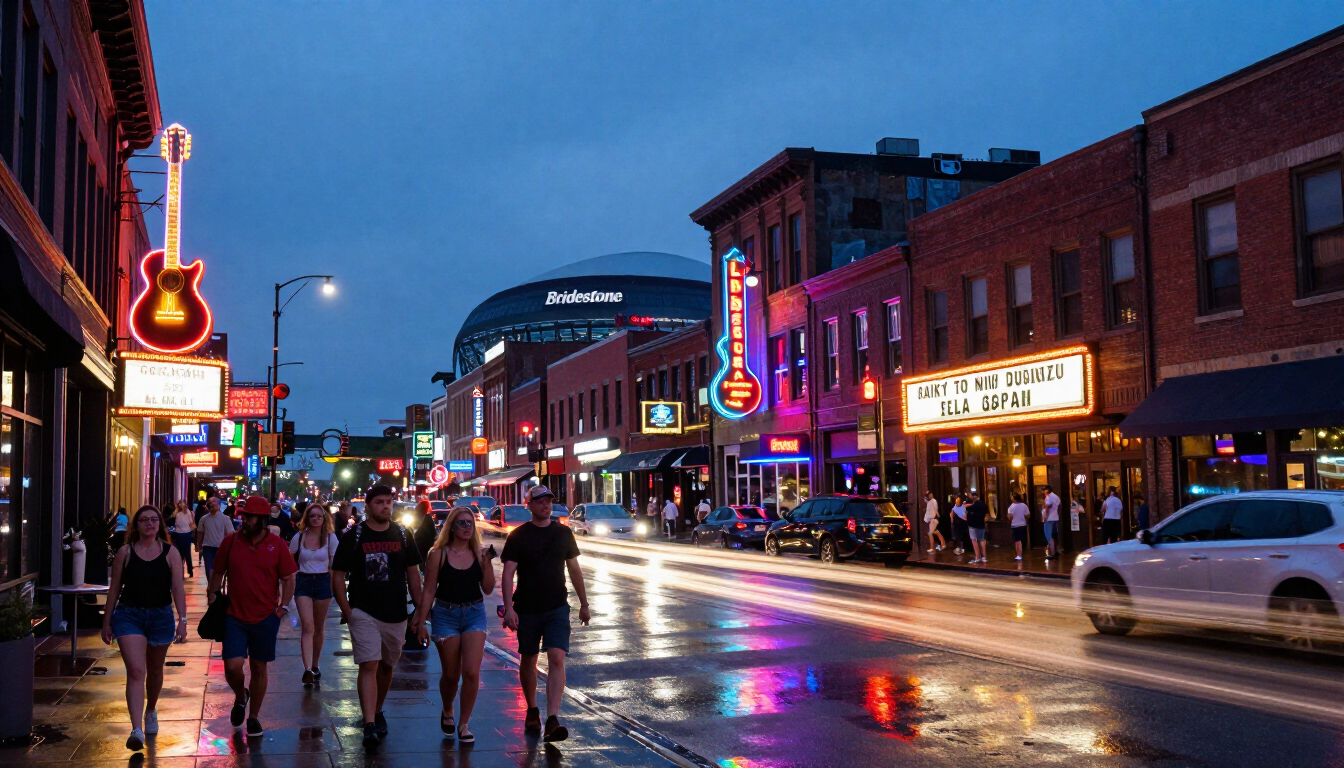
Start here
Key takeaways
- Nashville's music scene ranges from 70,000-capacity stadium shows to intimate songwriter rounds in a room with 50 chairs. This guide helps you plan a weekend around a show or festival, with sections on featured events, where to stay, transportation, venues, itineraries, neighborhoods, food, and packing.
- Most concert travelers fly into BNA, stay near downtown Nashville or Midtown, and rely on walking and rideshare instead of renting a car. Nashville is busy year-round with tourists and events, so early planning matters.
- A few marquee experiences worth anchoring your trip around: CMA Fest in June, the Grand Ole Opry (which celebrated its 100th anniversary in 2025), the Country Music Hall of Fame, and a lower broadway honky tonk crawl. Use this page as your starting point, then follow the links below for deeper detail on areas to stay, transportation, itineraries, and Bridgestone Arena. Time-sensitive details in this guide were last verified in July 2026.
Calendar
Featured Music City events
VewTopia may earn a commission if you book through links on this page, at no extra cost to you.
We may earn a commission from some ticket and hotel links; this doesn't affect our recommendations.
Your first step is picking a concert or festival anchor date, then building the Nashville trip around it. Nashville's mix of legendary music landmarks and cultural attractions means visitors can enjoy festivals, sporting events, and concerts year-round in Tennessee. Key annual events to know:
- CMA Fest — Held in early June across Nissan Stadium (capacity around 70,000) and multiple stages along lower broadway. Hundreds of thousands of country music fans descend on the city over four days. Multi-day passes often go on sale more than a year in advance, and early-bird pricing is significantly cheaper. See our full CMA Fest guide for planning details.
- Grand Ole Opry — A year-round institution with multiple shows per week. The Opry House seats roughly 4,400 guests, and each performance features six to eight artists on one stage. The Opry celebrated its 100th anniversary in 2025, making it a landmark music lovers and history buffs should not skip. Confirm show schedules on the official Opry site before booking.
- Bridgestone Arena concerts — Nashville's primary indoor arena hosts major touring acts from country to pop to hip-hop, with end-stage concert capacity around 18,500. Check the Bridgestone Arena concert calendar for current dates rather than relying on third-party listings.
- Nissan Stadium — Stadium-level headliners and festival nights happen here. A new enclosed stadium is slated for spring 2027, which may shift logistics for future shows.
- Ascend Amphitheater — An open-air venue on the Cumberland River with roughly 6,800 capacity. Seasonal shows run from April through October. Confirm bag policies and gate times on the venue's official website before your event.
For stadium headliners and Opry premium seats, plan to buy tickets months ahead. Join artist or venue newsletters for presale access rather than waiting for general on-sale, when high-demand shows often sell out within hours.
Lodging
Best areas to stay
Where you stay shapes your concert weekend. Walking distance to venues, late-night noise levels, and rideshare costs all depend on neighborhood choice in Nashville, TN. Staying near Broadway allows easy access to music venues, restaurants, and bars without needing a car. For hotel examples, price ranges, and neighborhood maps, see our in-depth guide to the best areas to stay for Nashville concerts.
Downtown / SoBro
The best fit if your main show is at Bridgestone Arena, Ryman Auditorium, or along honky tonk highway. Most SoBro hotels sit 3–7 minutes on foot from Bridgestone and 5–8 minutes from the Ryman. Tradeoff: Broadway noise carries, especially on weekends.
The Gulch
A trendy neighborhood known for restaurants and shopping, with boutique hotels and rooftop bars. About a 12–15 minute walk or short rideshare to Broadway and Bridgestone — a quieter retreat without needing to stumble home at 1 a.m.
Midtown / Vanderbilt area
A solid value option with more local bars and live music along Division Street. Quick rideshare to the musicians hall of fame area and West End, but not ideal if you want to walk back from lower broadway after midnight.
Opryland area
Only worth it if your primary event is at the Grand Ole Opry or Gaylord Opryland Resort. It's roughly 15–25 minutes by car from downtown depending on traffic, so less convenient for Broadway nights.
For distance estimates: BNA to downtown is about 8\u201310 miles (15\u201320 minutes in light traffic, longer during rush hour). The Gulch to Bridgestone runs about 12\u201315 minutes on foot. Recheck these with a maps app close to your travel dates.
Getting there
Airport arrival
Nashville International Airport (BNA) is the main gateway, located about 8 miles southeast of downtown Nashville, TN. Most visitors plan to arrive the day before a big show, and booking flights early is advisable when traveling during busy seasons like June (CMA Fest) or major fall weekends. Primary arrival options:
- Rideshare — Uber and Lyft have designated pickup zones at BNA. During rush hour, traffic in Nashville is notably heavy, so expect 25\u201340 minutes to reach downtown on a Friday evening versus 15\u201320 minutes in lighter conditions.
- Taxis — Available at the terminal. Flat-rate fares to downtown are sometimes offered; confirm current pricing on arrival.
- Hotel shuttles — Mostly limited to Opryland-area and airport-adjacent hotels. Check with your hotel before assuming shuttle availability.
Arrival tips: avoid same-day arrivals for major events if possible, keep your ticket apps and ID easily accessible, and plan where you'll drop bags if your hotel check-in is later than your arrival. BNA features live music stages, local food vendors, and country music art installations, so even your arrival sets the tone. Check TSA guidance for security wait times before your departure morning, especially after a packed concert night in July or another peak month.
Local transit
Getting around without a car
Most concert-focused visitors do not need to rent a car if they stay in downtown, SoBro, or the Gulch. Local transportation can be managed easily with rideshare or walking. Driving and parking in downtown Nashville can be expensive, and parking downtown is difficult during major events. For route examples and neighborhood-by-neighborhood advice, see our full breakdown of Nashville concert transportation options.
Walking
Lower broadway, Bridgestone Arena, Ryman Auditorium, the country music hall of fame, musicians hall of fame, and Ascend Amphitheater are all within a roughly 5\u201315 minute walk of each other in the core. Sidewalks are flat downtown, though pedestrian crowds get thick on show nights.
Rideshare
Ride-sharing services are recommended for downtown travel. After headline sets, surge pricing spikes near venue exits. Walk a few blocks away from the densest crowds to reduce waiting time and cost. Set your pickup point in advance.
Public transit
WeGo buses serve downtown and surrounding areas but offer limited late-night service. Check routes and schedules on the official WeGo site before relying on a bus for post-show rides.
Scooters and bikes
Shared micromobility works for daytime hops between the Gulch, Midtown, and downtown. Do not ride impaired after concerts.
Bus tour option
If sightseeing appeals, the Old Town Trolley Tours bus tour has 13 convenient stops across an 11-mile route, averaging 1 hour and 50 minutes for the full loop. Nashville's Old Town Trolley operates 362 days a year, making it a reliable way to discover iconic landmarks and neighborhoods beyond walking range.
Where the shows happen
Major venues
Here is a quick orientation to the main Nashville, TN concert and performance venues you should know. Nashville is known for its historic venues, and the city's music scene ranges from large concerts to intimate performances.
- Bridgestone Arena — A 17,000+ capacity indoor arena in SoBro, home to the NHL's Predators and many major touring acts. End-stage concert capacity reaches roughly 18,500; center-stage setups can push past 20,000. See our Bridgestone Arena guide for seating, nearby hotels, and arrival tips.
- Ryman Auditorium — The mother church of country music, built in 1892 as the Union Gospel Tabernacle. Ryman Auditorium seats 2,500 people across its historic pew seats. The acoustics are exceptional, the sightlines are tight, and the rich history is palpable. Legendary artists like Johnny Cash, Patsy Cline, and Dolly Parton have performed on this stage. Daytime tours are available year-round.
- Grand Ole Opry House — Located northeast of downtown near Opry Mills and Opryland. Weekly Opry shows, backstage tours, and special broadcasts happen here. It's a different building from the Ryman, though the Opry broadcast from the Ryman for decades before moving in 1974.
- Ascend Amphitheater — Open-air on the Cumberland River with roughly 2,300 fixed seats and 4,500 lawn spots. Seasonal shows run spring through fall. Bring weather-appropriate layers and check the venue's bag policy before your show.
- Nissan Stadium — Outdoor stadium with capacity around 70,000 for concerts, used for CMA Fest headliners and major touring acts.
Other music landmarks worth a visit: the country music hall of fame and Museum (the largest music museum in Nashville, opened in 1967), the musicians hall of fame (featuring instruments and memorabilia from artists like Jimi Hendrix), the National Museum of African American Music (which explores the impact of African Americans on music), and music row's famous recording studios including RCA Studio B tours where Elvis Presley once recorded. Check each venue's official site for current prohibited items, bag sizes, cashless policies, and entry times before your show. Security procedures vary, and every venue runs its own security service at gates.
Trip planning
Weekend itinerary: honky tonk highway
This section outlines a sample 3-day Nashville concert weekend centered on one big show, plus daytime exploration to discover the city's soul beyond the stage. For a long weekend at a comfortable pace, see our full Nashville music weekend itinerary, which includes more specific time blocks and alternates for different music tastes.
Friday — Arrive and Explore
Check into your downtown or Gulch hotel. Walk lower broadway's honky tonk highway, where bars feature live music and singing with no cover charge. Stop at spots like Tootsies Orchid Lounge or Robert's Western World. Fun starts early here, so you can turn in at a reasonable hour before Saturday's main event.
Saturday — Museums and the Main Show
Spend the morning at the country music hall of fame and Museum, a must-see attraction with optional add-ons like the Hatch Show Print shop or an RCA Studio B tour on music row. The hall of fame showcases instruments, costumes, and artifacts from every era of country music. Grab an afternoon break at your hotel or a nearby caf\u00e9, then head to your evening performance at Bridgestone Arena, Ryman, or Ascend Amphitheater.
Sunday — Brunch and One More Stop
Start with brunch in the Gulch (Peg Leg Porker for barbecue, or Joyland, a fast casual hamburger joint created by Sean Brock) or explore 12South, which is famous for local boutiques and dining options. Finish with a matinee Opry show, a walk through the musicians hall of fame, or a stroll through Centennial Park, which commemorates Tennessee's statehood since 1897 and houses a full scale replica of the Parthenon — a unique landmark you won't find in any other American city. Then head to BNA.
Nightlife
Live-music neighborhoods and Music Row
Nashville's live-music zones each have a distinct personality. Knowing which one fits your vibe helps you plan better evenings and protect your energy for the main show.
- Lower Broadway — The classic honky tonk stretch. Multi-level bars with all-day live bands, mostly free entry with tip jars, and a mix of country covers and rock. Honky Tonk Highway features bars with live music and no cover charge, though the volume and crowds (especially Thursday through Saturday) are intense. Not ideal if you want quiet conversation over alcoholic beverages.
- Midtown / Division Street — A younger, more local-leaning bar and music area with college and medical-center crowds. Easier bar-hopping than Broadway on big tourist weekends, with more casual venues and group-friendly patios.
- The Gulch — More polished, with a handful of live-music spots, rooftop bars, and easy access to lower broadway via a short ride or a 15\u201320 minute walk.
- East Nashville (Five Points) — Home to small clubs, songwriter rooms, and neighborhood bars. The Bluebird Cafe is a renowned venue for songwriters, drawing music lovers who want emerging artists and fewer bachelor parties. A good fit if you want to explore something beyond the Broadway scene.
- Music Row — Music Row is the heart of Nashville's country music industry since the 1950s. It's more of a working neighborhood of studios and offices — worth a daytime walking tour to see historic buildings, but not a dense nightlife district. Musicians Corner features free outdoor concerts in Nashville's Centennial Park nearby, a great daytime option.
Safety tips: stick to main streets after shows, plan a rideshare meetup point for your group, and pace your nights if you have early museum or Opry reservations. Visitors and locals alike enjoy these neighborhoods, but standard city awareness applies after dark.
Beyond the show
Food and Country Music Hall attractions
A strong Nashville, TN concert trip mixes country music with food, history, and a few non-music breaks. Nashville was rated the most underrated food city in the US, and the range of dining runs well beyond honky tonk bar snacks.
Must-try local foods
- Nashville hot chicken — Prince's Hot Chicken is the originator of Nashville's spicy chicken. Hattie B's is another popular option with shorter lines at off-peak times.
- Barbecue — Peg Leg Porker serves award-winning BBQ in the Gulch.
- Meat-and-three plates — Southerners often enjoy a meat-and-three meal with rotating sides. Arnold's Country Kitchen is a local classic.
- Assembly Food Hall on lower broadway features over 30 eateries and bars, making it a convenient pre- or post-show option for a group with different tastes.
Book reservations for sit-down restaurants on concert nights. Popular spots fill up fast, especially on weekends.
Music-focused attractions
- Country Music Hall of Fame and Museum — Opened in 1967, it's the largest music museum in Nashville and a showcase of country music history from its roots to modern stars.
- Musicians Hall of Fame — Highlights the studio musicians behind legendary artists, with memorabilia and instruments from sessions that shaped world-famous recordings.
- National Museum of African American Music — Explores the foundational impact of African Americans on every major genre, from gospel to soul to hip-hop.
Non-music breaks for history buffs and families
- Belle Meade Historic Site & Winery — A famous thoroughbred horse farm. Today it offers history, tastings, and grounds worth exploring.
- Cheekwood Estate & Gardens — Seasonal gardens, outdoor sculptures, and rotating art on beautiful grounds.
- Andrew Jackson's Hermitage — A preserved antebellum estate outside the city, offering a look at early Tennessee history.
- Tennessee State Capitol — The state capitol building sits on a hill overlooking downtown and is worth a quick visit.
- Frist Art Museum — Rotating exhibitions inside an Art Deco former post office.
Check each attraction's official website for opening hours and tour times before your trip. Hours and ticketing can change, especially around holidays.
Preparation
Weather and packing
Nashville's weather shifts quickly, especially in spring and fall. Your packing list depends on whether you're heading to an indoor venue like Bridgestone, Ryman, or the Opry House, or an outdoor event at Ascend Amphitheater or a festival on open grounds.
- Summer (June\u2013August): Hot and humid, with frequent afternoon thunderstorms. July is typically the hottest month. Plan for heat if you're standing in line or on a lawn.
- Spring and fall: Mild but variable. Spring and fall are the best times to visit Nashville for mild weather, but layering is essential since mornings can be cool and afternoons warm.
- Winter: Cool with occasional rain. Outdoor concerts are rarer but not unheard of.
Concert packing tips
- Breathable layers for standing-room shows
- A light rain jacket for outdoor venues and rooftop bars
- Comfortable closed-toe shoes for walking lower broadway and venue steps
- Ear protection if you're close to speakers — protect your hearing, especially at indoor shows where volume levels peak
- A small clear bag that meets venue security policies (many venues enforce a 12\u2033 \u00d7 6\u2033 \u00d7 12\u2033 clear bag limit)
Dress codes are casual at most shows and honky tonks, though some hotel lounges and restaurants prefer smart-casual. Cowboy boots are common but not required. Confirm exact bag size limits and prohibited items on your specific venue's official site before packing. Check a weather forecast close to your travel dates rather than relying on seasonal averages alone.
Questions
FAQ
These answers cover common Nashville concert travel questions beyond what's detailed above.
How many days do I need for a Nashville concert trip?
Two to three nights works well for most visitors: one arrival evening to explore lower broadway, one full day centered on the main concert plus a museum visit, and a final morning for brunch and a last attraction. If you're attending a multi-day festival like CMA Fest, plan for 4–5 nights to avoid burnout and allow one non-festival day. Travelers on tight schedules can still enjoy a focused one-night trip built around a single venue and neighborhood.
Is Nashville safe at night around concerts?
The main entertainment districts — lower broadway, SoBro, the Gulch, and Midtown — are busy and generally feel safe, with heavy foot traffic and visible security. Stay with your group, keep valuables secure, use licensed rideshares or taxis from well-lit pickup points, and avoid walking alone on empty side streets late at night. Check recent safety updates from the Nashville Convention & Visitors Corp before your trip, since conditions can change.
Do I need to rent a car for a Nashville concert weekend?
Most concert-focused visitors staying in downtown, SoBro, or the Gulch can skip a rental car and rely on walking and rideshare. A rental makes sense if you plan to stay near Opryland, visit Belle Meade and Cheekwood in one day, or add side trips beyond the city. Compare hotel parking fees, estimated rideshare costs, and your itinerary to decide which option saves more money for your specific week.
Is Nashville kid-friendly for a music trip?
Many Nashville music attractions are family-friendly, including the Country Music Hall of Fame, Musicians Hall of Fame, National Museum of African American Music, and daytime Grand Ole Opry shows. Lower broadway at night skews heavily toward adult nightlife, so families may prefer daytime visits, quieter neighborhoods like the Gulch or 12South, or a park like Centennial Park. Check age policies and show content on each venue's official site before booking tickets for children.
When should I book hotels and tickets for big Nashville concerts?
Book hotel rooms several months in advance for citywide events like CMA Fest, major stadium shows, and busy fall weekends when sports and concerts overlap. Arena and Opry tickets for high-demand artists can sell out during public on-sale within minutes. Join artist or venue newsletters for presale access rather than relying on last-minute availability. Prices change frequently — always confirm directly with official ticketing channels and hotels.
Official sources
- Nashville International Airport (BNA) — flynashville.com
- Grand Ole Opry — opry.com
- Ryman Auditorium — ryman.com
- Bridgestone Arena — bridgestonearena.com
- Ascend Amphitheater — ascendamphitheater.com
- Nissan Stadium — nashvillesc.com / visitmusiccity.com
- Country Music Hall of Fame and Museum — countrymusichalloffame.org
- Musicians Hall of Fame and Museum — musicianshalloffame.com
- National Museum of African American Music — nmaam.org
- Belle Meade Historic Site — bellemeadeplantation.com
- Cheekwood Estate & Gardens — cheekwood.org
- Frist Art Museum — fristartmuseum.org
- Nashville Convention & Visitors Corp — visitmusiccity.com
Last verified: July 2026
All venue, airport, and attraction details should be checked against official sources immediately before publication or travel, as details can change.