
Start here
Key takeaways
- New York's concerts and performances span all five boroughs, from Madison Square Garden and Barclays Center in Manhattan and Brooklyn to Forest Hills Stadium in Queens, Prospect Park's Lena Horne Bandshell, and smaller venues across every neighborhood.
- Where you stay, which airport you fly into, and how you reach the stage all depend on your specific show. This page summarizes your options and sends you to deeper guides like the best areas to stay for NYC concerts and the NYC concert transportation guide.
- Specific show lineups, dates, and ticket availability shift often. Always verify on official event and venue sites before booking flights or hotels so you do not miss important updates. Time-sensitive details in this guide were last verified July 16, 2026.
Calendar
Featured NYC events
VewTopia may earn a commission if you book through links on this page, at no extra cost to you.
Affiliate disclosure: Some links on this page may earn Vewtopia a commission at no extra cost to you. We only reference platforms relevant to your planning.
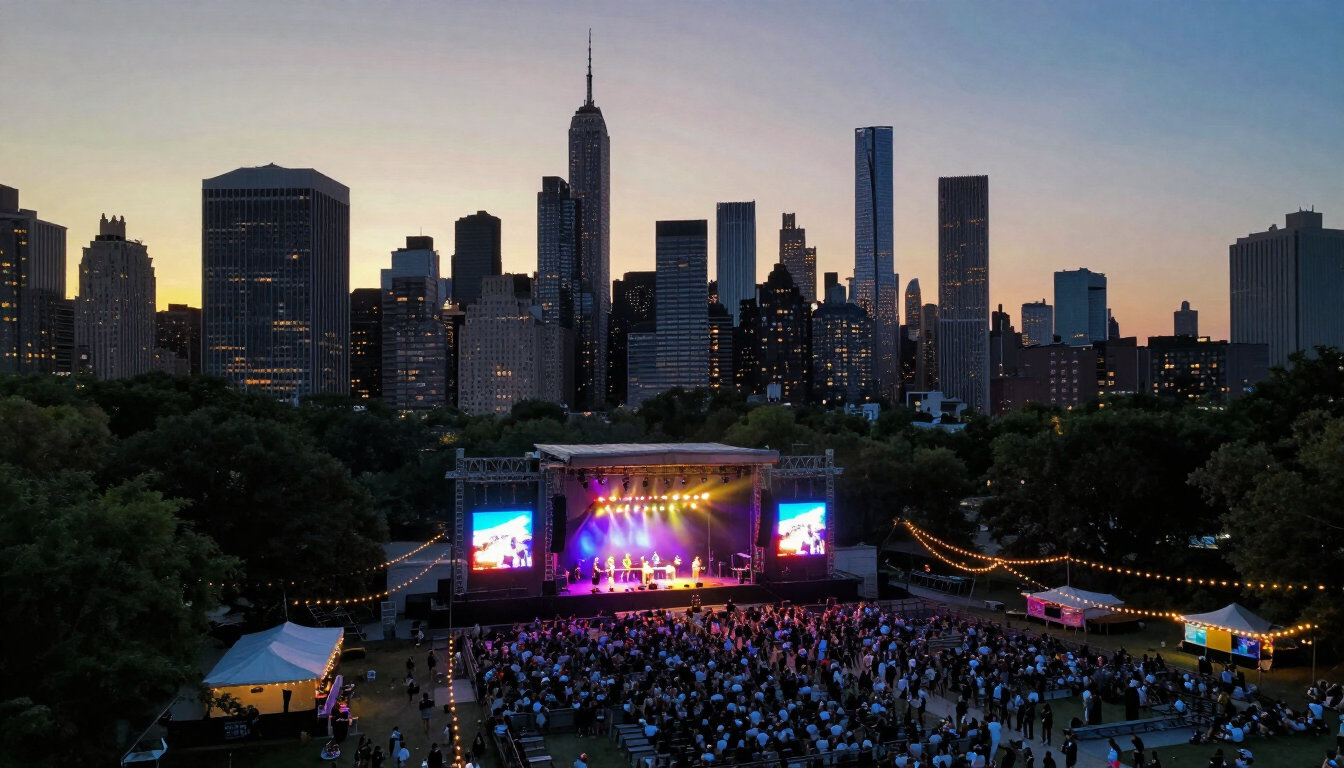
Free outdoor concerts are abundant during warmer months in NYC. Here is a snapshot of flagship upcoming events and upcoming concerts worth building a trip around:
- Ariana Grande — Barclays Center, Brooklyn, July 2026. Multi-night residency in a 19,000-seat arena; strong transit access from Downtown Brooklyn hotels.
- Rush (Fifty Something Tour) — Madison Square Garden, Manhattan, late July\u2013August 2026. Classic rock in the world's most iconic arena; Penn Station is directly below the venue.
- Governors Ball — Flushing Meadows Corona Park, Queens. A multi-day festival bringing together genres from hip-hop to indie rock, accessible via the 7 train.
- BRIC Celebrate Brooklyn! — Prospect Park's Lena Horne Bandshell, Brooklyn. A seasonal outdoor series that showcases artists across genres with skyline-adjacent evening energy.
- SummerStage — Central Park and parks citywide. SummerStage features over 80 free performances in NYC parks, making it one of the easiest ways to catch live music without buying tickets.
- Maxim Galkin's 50th Anniversary Tour — NYC date TBA, 2026. A notable international entertainment tour stop worth tracking for fans seeking something beyond the typical lineup.
- Iryna Bilyk — USA tour 2026, with an NYC stop expected. Check the official tour page for the confirmed date and venue.
- Harry Styles with Jamie xx — Madison Square Garden, fall 2026. Multi-night residency that tends to reshape hotel availability across Midtown.
Using reliable ticket platforms can help avoid scams. Ticket availability, support acts, and show times change often — verify directly with official event organizers before you plan travel or secure hotels. Dynamic cards below this section will let you filter upcoming events by date, borough, and genre.
Lodging
Best areas to stay in New York
Your concert plans should drive your neighborhood choice. An arena show at MSG calls for a different base than a club night in Williamsburg or a festival weekend in Queens. For the full breakdown, see the best areas to stay for NYC concerts. Key concert bases:
Midtown / Times Square
Walk to Madison Square Garden and Broadway venues. Pros: maximum subway lines, late-night food. Cons: noise, inflated hotel prices.
Chelsea / Flatiron
Close to smaller Manhattan rooms and The Shed. Quieter, good restaurants. Fewer late-night transit options northward.
Williamsburg / Greenpoint
Brooklyn Steel territory, vibrant nightlife, boutique hotels. L and G trains; limited late-night frequency on some lines.
Downtown Brooklyn
Walkable to Barclays Center and Prospect Park festivals. Strong bar scene. Fewer large hotel chains.
Long Island City
Quick subway hops to Queens festivals and Midtown. Lower cost, waterfront views. Fewer venues inside LIC itself.
Upper West Side
Lincoln Center, Central Park SummerStage. Spacious, quieter hotels. Longer travel to Brooklyn or club districts.
Booking accommodations near subway lines can save time and costs, especially for late returns. For travelers with disabilities, flatter neighborhoods like Midtown and the Upper West Side offer more reliable elevator-equipped stations. Book fully refundable rates when lineups are still shifting, and check travel time from your hotel to the venue at midnight — not midday.
Getting there
JFK, LGA and EWR context
New York City has three major airports, and the best one depends on your concert venue cluster and where you plan to stay.
- JFK (Queens): Best for Brooklyn-heavy weekends or Queens shows. Transit to Manhattan takes roughly 45\u201360+ minutes via AirTrain plus subway or LIRR. 24-hour AirTrain, but connecting trains thin out overnight.
- LGA (Queens): Closest to Manhattan by distance. Taxi or rideshare to Midtown runs about 25\u201340 minutes depending on traffic. Limited direct rail; best if staying in Upper Manhattan or Long Island City.
- EWR (Newark, NJ): Strong rail link via AirTrain plus NJ Transit to Penn Station in roughly 30\u201345 minutes. Often cheaper fares. Good for Midtown-focused trips.
NYC traffic can be intense, especially near major venues, so avoid assuming late-night frequencies match daytime schedules. Parking in New York City is expensive and hard to find — skip the rental car.
Shows ending near midnight change the airport calculus. An early morning flight from JFK after a late Barclays Center show is risky without buffer time. For checked luggage, leave space for merch — but avoid oversized bags that slow you down at venue security after landing. On a short concert weekend, the cheapest airport can eat into your trip if it adds 90 minutes of transit each way.
Local transit
Subway, rail, rideshare and walking
The subway provides quick access to major concert venues across the five boroughs and remains the default way to move between hotels, shows, and nightlife. Walking or biking is convenient for many venues in denser neighborhoods. For the detailed playbook, see the NYC concert transportation guide.
Key venue connections
- Madison Square Garden — Directly above Penn Station. Subway lines 1, 2, 3, A, C, E plus Amtrak, NJ Transit, and LIRR.
- Barclays Center — Atlantic Avenue\u2013Barclays Center hub serves 2, 3, 4, 5, B, D, N, Q, R lines. Easy reach from most Brooklyn neighborhoods.
- Forest Hills Stadium — Subway to 71 Av station (ADA accessible) or LIRR to Forest Hills. No venue parking.
- Prospect Park (Lena Horne Bandshell) — F, G, 2, 3 trains to nearby stops.
- Flushing Meadows — 7 train to Mets\u2013Willets Point or LIRR.
Subway service can be affected by maintenance and late-night waits. Some lines run 24 hours but with reduced frequency after midnight. Uber and Lyft are good for late-night events when trains thin out. About 44% of Manhattan subway stations are ADA-compliant; in Queens roughly 33%. Check the MTA accessibility map before assuming elevator access at your stop. Build in walking time between station exits and venue entrances — crowds and exit elevation changes at Penn Station or Atlantic Avenue can add ten minutes you did not expect.
Where the shows happen
Major live music venues
New York City features iconic concert venues from massive arenas to intimate clubs, each with its own offering from arena-scale production to intimate club experiences. Knowing a venue's layout and neighborhood helps you plan your whole night — from dinner to the encore to the ride home. Most venues offer accessible seating and services; confirm specifics on each venue's page.
- Madison Square Garden — Known as "The World's Most Famous Arena." Capacity ~20,000 for concerts. Midtown Manhattan. Floor GA pits, lower bowl, upper decks. Strict bag policies. Renowned for hosting world-class tour stops across decades.
- Radio City Music Hall — Features stunning Art Deco design. Capacity ~6,000. More refined theater vibe; check dress comfort for long evening shows.
- Barclays Center — Brooklyn, ~19,000 capacity. Strong transit access. Heavy foot traffic post-show; multiple exits help with dispersal.
- Forest Hills Stadium — Outdoor, Queens. Weather-dependent; no parking. Historic space with real history, filled with energy on summer nights.
- Beacon Theatre — Upper West Side, intimate mid-size room. Great sound, fewer security delays.
- Kings Theatre — Brooklyn, ornate restored theater. Ideal for discovering artists in a stunning setting.
- Prospect Park Lena Horne Bandshell — Outdoor, Brooklyn. BRIC Celebrate Brooklyn! series. Lawn seating, evening breeze, mosquito prep advised.
- Brooklyn Steel — Williamsburg. Brooklyn Steel is popular among indie and alternative music fans. Standing room, ~1,800 capacity.
- The Bowery Ballroom — Located in Manhattan's Lower East Side. Club-scale, ~575 capacity. One of the city's most loved small rooms.
- Terminal 5 — Hell's Kitchen, mid-size standing venue. Early arrival matters for good spots.
The Bronx and Staten Island host fewer large concert halls but cater to club and community-scale events worth exploring. When buying tickets, read the venue seating map carefully — obstructed views behind pillars or stage wings are common in older theaters. Detailed seat info and prohibited-item lists live on each venue's official site.
Trip planning
Weekend itinerary
This is a sample three-day music weekend, not a rigid schedule. Adapt it to whichever night holds your main show. For the expanded version, see the NYC music weekend itinerary.
Day 1 (Arrival + Manhattan show)
Arrive by early afternoon. Check into a Midtown or Chelsea hotel. Walk the area around your venue to orient yourself — it is advisable to explore the neighborhood around venues before shows. Grab an early dinner close by. Evening: arena or theater concert at MSG or Radio City.
Day 2 (Brooklyn or Queens focus)
Late morning coffee and record stores in Williamsburg. Afternoon in Prospect Park or a museum with late hours. Evening: outdoor show at the Bandshell, a Brooklyn Steel gig, or a festival date at Flushing Meadows.
Day 3 (Brunch + departure)
A High Line stroll or a neighborhood market. Allow two-plus hours of airport buffer. Pack merch carefully in checked luggage. Enjoy one last taste of the city before your flight.
Beyond the show
Food and attractions near Prospect Park
Concerts anchor your nights, but New York's food and culture round out the trip — especially if you cluster activities by borough.
- Near MSG / Times Square: Casual pre-show spots on side streets west of 8th Ave. Avoid the most tourist-heavy blocks for better deals.
- Near Barclays Center: Late-night slices on Flatbush, neighborhood restaurants on Atlantic Ave. Good post-show fun without traveling far.
- Prospect Park area: Picnic provisions from Park Slope delis, food trucks near the Bandshell on show nights.
- Queens (Flushing Meadows / Forest Hills): Some of the city's best global food. Flushing's food courts provide an array of cuisines you will not find easily elsewhere.
- Central Park / Midtown: Harlem Meer Performance Festival offers free concerts in Central Park. Bryant Park hosts regular free concerts featuring various music genres. Both pair well with a lunch break.
Using food apps can help find highly-rated eateries near concert venues on short notice. Eat early — aim for dinner at least 90 minutes before doors to avoid rushing security lines. Mix one splurge meal with cheaper local spots or food carts to keep your budget flexible. Museums like the Met or MoMA offer late hours on select nights, fitting neatly before an evening show.
Pick one or two daytime activities instead of overpacking sightseeing. The live music is the reason you came.
Preparation
Seasonal packing
New York's seasons swing from humid summers to windy winters. Concert travelers need to think about both outdoor time and indoor crowd heat.
- Spring (Mar\u2013May): Layers. A light jacket for cool evenings, comfortable shoes for walking.
- Summer (Jun\u2013Aug): Breathable fabrics, compact rain layers for sudden showers, sunscreen for outdoor shows. SummerStage offers over 80 free performances in Central Park — plan to be outside.
- Fall (Sep\u2013Nov): Temperatures can swing widely in a single day. A packable hoodie handles air-conditioned rooms and cool park nights.
- Winter (Dec\u2013Feb): Warm coat, hat, gloves. Indoor arena heat means you will want to shed layers once inside.
Concert-specific essentials: portable chargers are recommended to keep devices powered during concerts, earplugs for hearing protection, collapsible water bottles where venues allow them, and a small clear bag that fits most venue policies. Many venues enforce clear bag policies or restrict bag sizes — check before you leave the hotel. Security rules may also restrict umbrellas, large bags, or professional cameras.
Stay prepared
Safety and late-night logistics
New York's concert districts stay busy late into the night. Smart planning around routes, belongings, and meeting points keeps your evening smooth.
- Screenshot tickets and directions before leaving Wi-Fi. Planning travel routes in advance can prevent delays for late-night events.
- Agree on a post-show meetup spot with your group in case you get separated. Pick a landmark near but not at the densest exit.
- Arriving 30 to 60 minutes early can help avoid delays at concerts and gives you time to clear security without stress.
- Crowded areas like concerts increase the risk of pickpocketing. Keep valuables zipped and close.
Solo travelers: sit or stand where you feel comfortable, trust your instincts about moving closer to staff or exits, and keep your phone charged. Venue security screening and bag checks are standard — travel light and check the venue's prohibited-item list beforehand.
Getting back to your hotel: check last-train times, verify your rideshare vehicle's license plate, and save your hotel address both in your phone and on a paper backup. Alcohol and local laws apply — pace yourself, especially if you are navigating unfamiliar boroughs late at night.
Questions
FAQ
These FAQs cover planning questions that do not fit neatly into the main sections above but matter when you are ready to book.
How far in advance should I plan a New York City concert trip?
Big arena tours and festivals often sell out months in advance — Madison Square Garden reveals shows for late 2026 already. Smaller club shows may stay available within a week of the date. For peak weekends, lock in flights and hotels two to four months ahead. Flexible, refundable bookings protect you if lineups or tour legs shift.
Is it realistic to see concerts in two different boroughs on the same night?
Stacking two full concerts across boroughs in one evening rarely works. Transit time, security lines, and exit delays eat into your schedule. A better alternative: pair an early free park performance or in-store set with a later main show. Keep multi-borough plans for different nights and check door times and curfews before attempting any double-header.
Can I bring bags, cameras or instruments into New York City venues?
Policies vary, but most major venues limit bag size, restrict professional cameras, and do not allow instruments unless you are performing. Check each venue's official guest information or FAQ page on the day of the show. Use a small compliant bag and leave large items at the hotel to speed up screening.
Are there family-friendly concerts and events in New York City?
Many outdoor series in Central Park, Prospect Park, and neighborhood plazas welcome kids. Some early-evening theater or orchestral performances are also suitable. Check age restrictions, explicit-content notices, and show end times on official event pages before booking. Pick venues with easy stroller routes or nearby transit, and plan quieter daytime activities between late nights.
How do I handle rain or bad weather for outdoor shows?
Some outdoor events run rain or shine while others may delay or cancel. Policies differ by promoter and venue. Pack light rain gear and shoes that handle wet grass. Check official event social channels on the day of the show for updates, and have a backup indoor plan — a bar with live music, a club, or a museum — ready if severe weather changes the schedule.
Official sources
- Barclays Center events — barclayscenter.com
- MTA Forest Hills Stadium transit — mta.info
- Airport transit comparison — kayak.com
- MTA accessibility data — Wikipedia \u2013 Accessibility of the MTA
Last verified: July 16, 2026
Event dates, venues and policies in this guide were last verified against official sources on July 16, 2026. Always confirm event dates, venues and policies on official websites before you book, as details can change.