
Start here
Key Takeaways
- Our best overall pick is a slim 10,000 mAh power bank with 20W+ USB-C output, striking the right balance of capacity and pocketability for a single festival day.
- A 10,000 mAh bank is generally ideal for single-day city festivals, while 20,000 to 25,000 mAh is the sweet spot for multi-day camping weekends without wall-outlet access.
- Fast charging output matters more than gimmicky extras — a genuine 20W+ USB-C port delivers a meaningfully faster top-up than flashlight modes or extra ports you'll rarely use.
- Solar-panel power banks are largely ineffective for real festival charging needs; direct sunlight exposure and panel size limit their actual output far below what's advertised.
- Airlines cap carry-on power banks at 100 watt-hours (Wh) without special approval, which most single-day banks fall comfortably under, but very large camping banks can approach that limit.
- Anker remains one of the most consistently reliable brands across independent reviews for battery safety, accurate capacity claims, and long-term durability.
- Budget-friendly options like the INIU B61 deliver real fast-charging performance without paying a premium brand markup.
At a glance
Quick Facts & Planning Snapshot
Ideal capacity for day festivals
10,000 mAh is generally enough to get most phones through a single festival day with room to spare
Ideal capacity for camping weekends
20,000 to 25,000 mAh covers 3 to 4 days without reliable access to a wall outlet
Fast-charging output to look for
20W or higher USB-C power delivery cuts recharge time noticeably versus older 5W chargers
Airline carry-on limit
100 watt-hours (Wh) is the standard cutoff most airlines enforce without special approval
Real-world output vs. rating
Expect roughly 60 to 70 percent of a bank's stated mAh capacity in actual usable phone charge
Decision framework: match capacity to trip length first, then prioritize genuine fast-charging output and physical size over flashy extras. Comparison categories: we weigh capacity versus weight, real charging speed, port count and type, durability, safety certifications, and flight-legal capacity. Budgeting approach: treat a good power bank as reusable gear for every future festival and trip rather than a single-event purchase, and buy once for the capacity tier that matches how you actually travel.
Audience
Who This Guide Is For
This guide is built for attendees heading to large multi-day music festivals — think Coachella, Glastonbury, Bonnaroo, Lollapalooza, or Primavera Sound — where a phone is your ticket, your map, your group chat, and your camera all at once, and running out of battery by mid-afternoon genuinely disrupts the day. It's equally useful for a single-day city festival attendee who just needs a reliable top-up to get from doors-open to last-call, a camping-for-the-weekend fan who needs real multi-day capacity without a wall outlet in sight, a content creator filming sets who burns through battery far faster than the average attendee, and a group sharer who wants one bank capable of topping up multiple phones across friends.
This is not a guide to RV-scale power stations, generator setups, or professional-grade camera battery systems — those are entirely different product categories built for different needs. Everything recommended here is sized to fit in a pocket, belt bag, or small backpack and priced for a typical festival-goer's budget. If you're still working through your first-time festival guide checklist and want the bigger picture before narrowing in on charging gear specifically, start there for the full planning framework.
Our approach
How We Chose the Best Portable Chargers for Festivals
Every power bank on this list was evaluated first on the balance between capacity and weight, since a bank that promises huge battery life but weighs like a brick isn't practical to carry through a full day of standing, dancing, and walking. We favored products that deliver genuine fast-charging output — a real 20W or higher USB-C port — over banks that pad their spec sheet with a flashlight, extra ports you'll rarely use, or other gimmicks that don't meaningfully improve the charging experience.
Multiple output ports mattered for group scenarios where one bank might need to charge two phones at once, and physical size and pocketability were weighted heavily since a bank that doesn't fit comfortably in a hip bag or festival crossbody isn't one you'll actually carry. Durability features like water resistance and shock-resistant casing earned extra credit given how often festival gear ends up dropped in dirt, splashed with a drink, or caught in an unexpected rain shower.
Safety was non-negotiable: we prioritized banks built with certified battery cells and documented overcurrent, over-temperature, and short-circuit protection, since a cheap, unregulated power bank is a genuine fire risk in a crowded tent or backpack. We also confirmed every recommended capacity stays comfortably flight-legal under the 100 watt-hour carry-on limit, and we favored compact form factors that clear security screening quickly in busy, dark, and sometimes muddy festival-entry environments.
Fast reference
Quick Picks: Best Portable Chargers for Festivals by Scenario
VewTopia may earn a commission if you book through links on this page, at no extra cost to you.
Vewtopia is independent. Product links on this page are affiliate links and are clearly labeled; we may earn a commission at no extra cost to you.
Best overall
Anker Nano Power Bank 10K — a slim, reliable 10,000 mAh bank with a built-in USB-C cable and 22.5W output.
Best budget
INIU B61 — genuine fast-charging performance at a noticeably lower price point, with a helpful LED capacity display.
Best high-capacity
UGREEN Nexode 20K — a 20,000 mAh bank powerful enough to fast-charge a laptop, ideal for camping weekends.
Best slim
Anker 621 MagGo 5K — an ultra-thin magnetic charger that snaps onto a compatible phone for a quick, cable-free top-up.
Best Apple/Android mix
Anker PowerCore 10K — dual USB-C and USB-A output covers mixed-device groups without extra adapters.
Best wireless
Baseus PicoGo Qi2 10K — Qi2 magnetic alignment brings faster, more reliable wireless charging than older Qi standards.
Understand the numbers
Festival Power Basics: Capacity and Realistic Phone Charges
The milliamp-hour (mAh) rating printed on a power bank measures how much energy it can store, not how far that energy will actually get you — the two are related but not identical. Most modern smartphone batteries hold somewhere between 3,500 and 5,000 mAh, so a power bank's stated capacity needs to be compared against your specific phone's battery size to estimate how many full charges you'll realistically get.
Real-world output typically lands at 60 to 70 percent of a bank's stated capacity, due to conversion losses between the bank's internal voltage and your phone's charging voltage, plus a bit of heat loss during transfer. Using that math, a 5,000 mAh bank generally delivers about one full phone charge, a 10,000 mAh bank delivers roughly two full charges, a 20,000 mAh bank delivers about four to five full charges, and a 30,000 mAh bank can stretch to five to eight full charges depending on your specific phone's battery size.
A light user who mostly checks the time, texts a group chat, and snaps the occasional photo will stretch a single charge much further than a power user who's live-streaming sets, running GPS navigation constantly, and keeping the screen brightness maxed out all day. Simple battery-stretching tips — enabling low-power mode early, dimming screen brightness, and closing background apps you're not actively using — can meaningfully extend how long your phone lasts between charging sessions, especially on a hot, sunny day when phones already tend to drain faster.
Compare all five
Comparison Table: Best Portable Chargers for Festivals at a Glance
| Product | Capacity | Max output | Ports | Weight | Notable features | Best for |
|---|---|---|---|---|---|---|
| Anker Nano Power Bank 10K | 10,000 mAh | 22.5W USB-C | 1x USB-C | ~180g | Built-in USB-C cable, ultra-slim | Best overallShop (sponsored) |
| INIU B61 | 10,000 mAh | 22.5W USB-C | 1x USB-C, 1x USB-A | ~190g | LED display, budget-friendly | Best budgetShop (sponsored) |
| UGREEN Nexode 20K | 20,000 mAh | 100W USB-C PD | 2x USB-C, 1x USB-A | ~430g | Laptop-capable output, digital display | Best high-capacityShop (sponsored) |
| Anker 621 MagGo 5K | 5,000 mAh | 7.5W wireless / 20W wired | 1x USB-C, MagSafe-style wireless | ~145g | Magnetic snap-on, built-in kickstand | Best slimShop (sponsored) |
| Baseus PicoGo Qi2 10K | 10,000 mAh | 10W wireless / 20W wired | 1x USB-C, Qi2 wireless | ~210g | Qi2 magnetic alignment, foldable stand | Best wirelessShop (sponsored) |
Deep dive
Individual Product Reviews
Anker Nano Power Bank 10K
10,000 mAh / 22.5W USB-CAnker's Nano line pairs a genuinely slim, pocketable design with a built-in USB-C cable, so you never have to dig for a separate cord in a crowded, dark tent. The 22.5W output delivers a meaningfully fast top-up, and Anker's track record for accurate capacity claims and battery safety makes it an easy default recommendation for most single-day festival trips.
Drawbacks: 10,000 mAh may not be quite enough for heavy multi-day camping use without a recharge opportunity.
Skip it if: You need multi-day camping capacity — size up to the UGREEN Nexode 20K instead.
Check availability (sponsored)INIU B61
10,000 mAh / 22.5W USB-CINIU has built a strong budget reputation by matching premium-brand charging speeds at a noticeably lower price point. The B61 includes both USB-C and USB-A outputs plus a simple LED display showing remaining capacity, which is genuinely useful for deciding whether you need to conserve power late in the day.
Drawbacks: Build quality, while solid, doesn't feel quite as premium or durable long-term as pricier competitors.
Check availability (sponsored)UGREEN Nexode 20K
20,000 mAh / 100W USB-C PDThis is the pick for camping festivals where you might go three or four days without reliable outlet access. The 100W output is powerful enough to fast-charge a laptop in a pinch, and the digital percentage display takes the guesswork out of managing a shared bank across a group of friends.
Drawbacks: At roughly 430g, it's noticeably heavier and bulkier than single-day options, so it's overkill for a one-day city festival.
Skip it if: You're only attending a single-day event — a slimmer 10,000 mAh bank will serve you better.
Check availability (sponsored)Anker 621 MagGo 5K
5,000 mAh / 7.5W wireless, 20W wiredThe MagGo's magnetic snap-on design is genuinely convenient — attach it to a compatible iPhone and keep your hands free for dancing, filming, or holding a drink. The built-in kickstand also doubles as a way to prop your phone up for hands-free video during a set.
Drawbacks: 5,000 mAh and slower wireless charging speeds mean this is a top-up device, not a full-day solution on its own.
Check availability (sponsored)Baseus PicoGo Qi2 10K
10,000 mAh / 20W wired, 10W Qi2 wirelessQi2's magnetic alignment fixes the biggest annoyance with older wireless chargers — the connection stays properly centered even while you're moving around, which matters a lot at a festival where you're rarely standing still. The foldable stand also makes hands-free video calls or navigation easier to manage.
Drawbacks: Wireless charging remains less efficient than a direct USB-C cable connection, so expect a bit more real-world capacity loss than wired-only banks.
Check availability (sponsored)What matters on site
Size, Weight and Charging Speed: What Actually Matters on Site
Typical weight ranges run 150 to 250 grams for a 10,000 mAh bank and 300 to 450 grams for a 20,000 mAh or larger unit — a meaningful difference once you've been carrying it in a hip bag or pocket for eight or more hours. A fast USB-C port rated at 20W or higher is the baseline worth looking for; anything slower will leave you waiting noticeably longer for a meaningful top-up between sets.
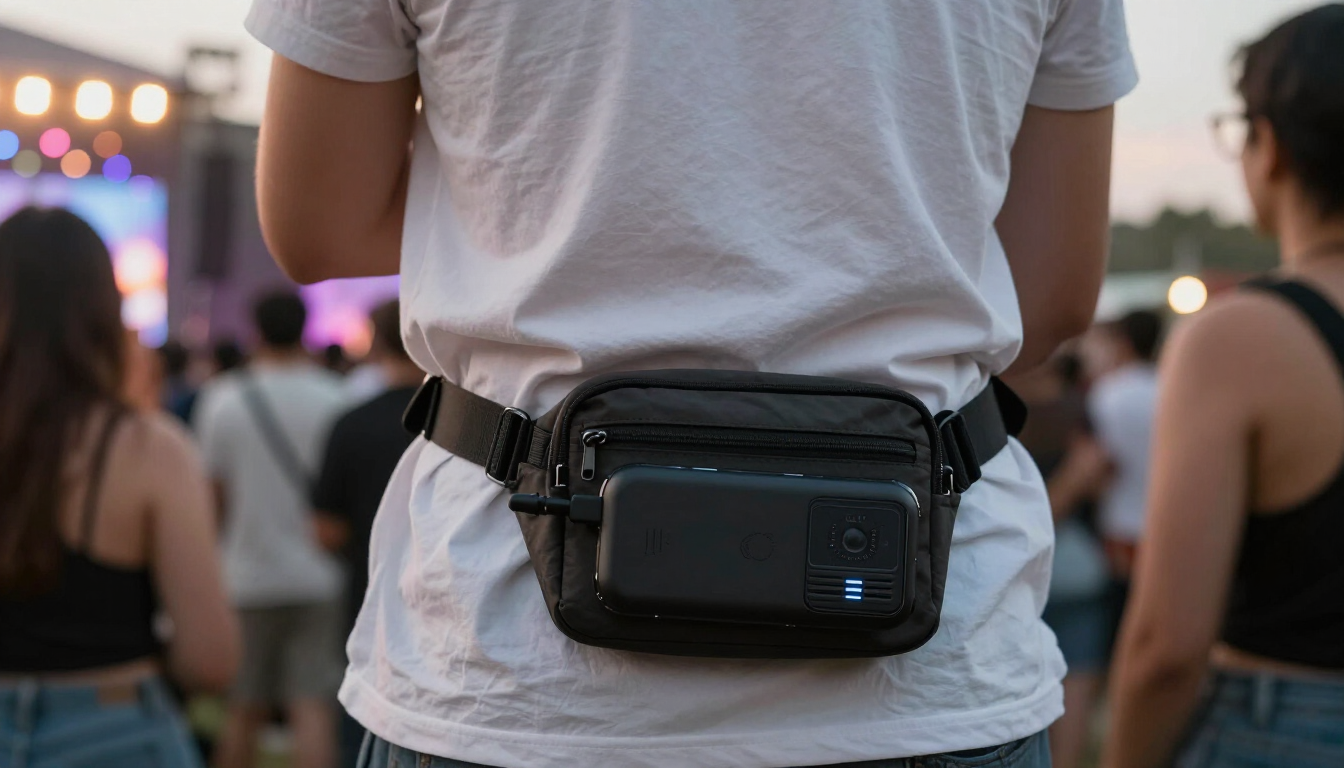
Most modern fast-charging banks can deliver roughly 50 percent of a phone's battery in about 30 minutes under ideal conditions, using protocols like Programmable Power Supply (PPS) or Quick Charge to negotiate the fastest safe speed your specific phone supports. For most festival-goers, the best practical setup is a slim 10,000 mAh bank carried for daytime use, paired with a larger camp-bank kept at your tent or hotel room for overnight recharging and topping off the smaller bank between days. Review our festival bags and carry options guide to find a bag with a dedicated pocket sized for exactly this kind of daily-carry charger.
Match it to your trip
Camping vs. City Festival Needs
A multi-day camping festival lasting three to four days with no wall outlet in sight turns a 20,000 mAh power bank into a genuine lifeline rather than a nice-to-have. Without it, you're stuck rationing phone use, missing group check-ins, or losing access to mobile tickets right when you need them most. A light camping packing setup pairs a 20,000 mAh main bank with a slim 5,000 to 10,000 mAh secondary bank for daytime carry, leaving the larger unit charging (or simply resting) back at camp.
A single-day city arena or downtown festival is a much lower-stakes charging scenario — a 5,000 to 10,000 mAh bank is plenty to get you from arrival through last call, especially if you can top up briefly in a car, hotel room, or rideshare between activities. For a full breakdown of what else differs between these two trip types, and how to pack for each one, see our festival packing list and our dedicated festival camping gear guide for shelter, sleep-system, and power planning specific to overnight events.
Don't overlook this
Cables, Charging Stations and Safety Considerations
Pack at least one spare USB-C cable — cables are the single most common thing to lose, fray, or accidentally leave behind at a festival, and a bank without a working cable is useless. Bring a 20 to 30W wall adapter for overnight recharging back at your hotel or car, and if your power bank supports pass-through charging, you can charge the bank and your phone simultaneously overnight rather than waiting for the bank to fill first.
Many larger festivals now offer on-site charging stations or kiosks, which can work well as a backup option but come with real tradeoffs: lines form quickly during peak hours, availability isn't guaranteed, and some kiosks charge a rental or session fee. Treat them as a supplement to your own gear rather than your primary plan. On the safety side, lithium batteries degrade faster and can become genuinely hazardous when exposed to direct sun or left in a hot car or tent for hours, so store your power bank in a shaded, ventilated part of your bag and consider a waterproof pouch if rain or splashing is a realistic risk at your event. Round out your safety setup with our comfort and protection essentials guide, and always check the specific festival's rules on battery capacity limits and prohibited electronics before you pack.
Common questions
FAQ: Portable Chargers and Festival Rules
How we research
Research and Evaluation Methodology
This guide is based on research, not in-house lab testing. We reviewed official manufacturer specification sheets for every product recommended, including published mAh capacity, maximum wattage output, port configurations, and weight, and we read independent review benchmarks from outlets that specialize in mobile accessories and battery testing, including Android Central and Tom's Guide.
We cross-referenced flight-legality guidance against official FAA and IATA watt-hour limits for carry-on lithium batteries, and we grounded our real-world "number of phone charges" estimates in typical modern smartphone battery sizes and commonly cited conversion-efficiency figures. We also reviewed publicly posted festival guest guides to understand how battery-capacity restrictions and clear-bag policies typically apply to portable chargers at major events.
Products were shortlisted based on consistent, credible feedback on charging speed and battery-life accuracy across a meaningful number of independent reviews, clear and specific manufacturer specifications rather than vague marketing claims, and evidence of safety certifications for battery cells. Editorial judgment was applied throughout to write independent descriptions rather than copying manufacturer marketing copy, and every review above includes drawbacks and, where relevant, who should consider a different option instead. No pricing or discount claims are made, and the last verified date below reflects when specifications and sources were most recently checked. For the full festival gear checklist beyond charging specifically, see our broader overview.
Verify the details
Official Sources
- FAA — Passengers and Batteries guidance on carry-on lithium battery watt-hour limits
- IATA — Guidance to Operators on Power Banks and portable lithium-battery devices
- Manufacturer specification sheets for INIU, Anker, UGREEN, and Baseus
- Independent review benchmarks from Android Central and Tom's Guide
Product specifications, included accessories, and pricing tiers can change between the day you read this and the day you buy. Always re-verify current details, and check the specific festival's electronics and battery-capacity policy, against the official sources above before purchasing or packing.
Last verified: July 2026