
Start here
Key takeaways
- This hub helps you compare camping festivals, plan travel logistics, and get a realistic picture of what living on festival grounds actually involves — dust, rain, late nights, and all.
- Sections below cover deciding if a camping festival fits your style, transporting gear, campsite setup, food and power, weather and safety, and recovery after the weekend.
- You'll find links to detailed guides for specific festivals like Bonnaroo and Electric Forest, plus gear roundups covering festival tents and portable chargers.
- Advice applies to first-time and returning campers, with examples for car camping, tent-only areas, RV setups, and group camping.
- Proper preparation can enhance enjoyment at camping music festivals, and this page gives you the framework to build that preparation around.
Last verified: July 2026. Dates, policies and camping rules referenced below reflect information available at time of publication. Confirm details on official festival sites before booking camping passes.
Fit check
Is a camping festival right for you?
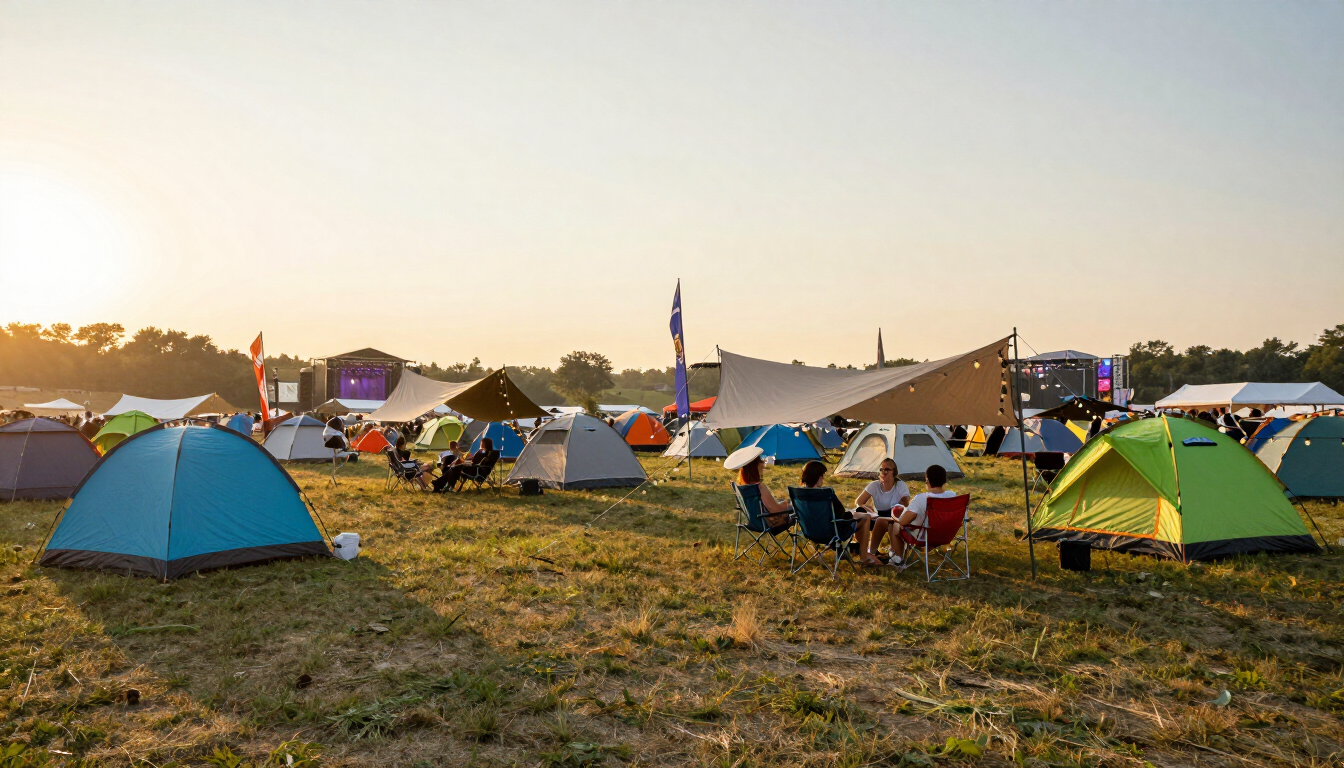
A camping music festival is a multi-day event where you live on-site for three to four nights. Bonnaroo in Tennessee and Electric Forest in Michigan are two of the most well-known examples. Instead of commuting each day, you stay embedded in the community — catching sunrise sets, wandering art installations, and meeting neighbors at your campsite.
Camping festivals vs. city or day-only events
- Full immersion: no scrambling for rideshares at 2 AM
- Stronger community feel — your group and neighbors become part of the weekend
- Rougher conditions: shared bathrooms, dust or mud, unpredictable weather
- More logistics: hauling gear, setting up shelter, managing food and power
Who usually loves this
- People comfortable with basic camping and flexible sleep
- Anyone excited about 24-hour campsites and spontaneous late-night fun
- Groups of friends who want to share the adventure together
Who might not
- Light sleepers who can't handle noise at night
- Anyone needing AC, private showers, or reliable refrigeration for medical needs
- People uncomfortable with long walks across uneven ground
Quick fit test — can you handle:
- Dust, mud, or rain for multiple days?
- Walking significant distances daily from your car to the venue?
- Carrying or pulling your gear across a field?
- Sharing community bathrooms and waiting in line?
If you're unsure, start with a shorter two- to three-day event for your first festival, and don't forget how much walking, noise, and setup it can involve. Most festivals provide basic amenities like restrooms and showers, so you're not entirely roughing it. Many festivals also offer workshops and activities outside of music, such as yoga and crafting, which give you reasons to explore the grounds early and discover hidden stages and art installations, though amenities, rules, and camping options vary by specific festival.
Common camping styles you'll see referenced throughout this hub: car camping next to your vehicle, walk-in tent camping, RV camping with hookups, and boutique glamping with pre-set tents.
Anchor events
Featured camping festival guides
This section acts as a mini-directory of major camping festivals. Use it to compare formats, locations, and conditions before diving into full destination guides.
VewTopia may earn a commission if you book through links on this page, at no extra cost to you.
Vewtopia may earn a commission on some gear links below. This does not influence our recommendations.
Bonnaroo
Manchester, Tennessee · Typically June
Massive four-day camping scene and an eclectic lineup. Primitive car camping sites run roughly 20′ × 20′ including your vehicle. The campground fills a sprawling area known as The Farm.
Electric Forest
Rothbury, Michigan · Typically late June
Known for its immersive lighting in a natural forest setting. Camping options range from GA tent sites to premium Good Life passes with upgraded amenities.
Coachella
Indio, California · Typically April
Large-scale car camping in a desert environment. Requires a separate camping pass with your ticket.
Firefly
Dover, Delaware · Typically September
A similar car camping culture to Coachella, with East Coast humidity to plan around.
Burning Man
Black Rock Desert, Nevada · Typically late August
Focuses on art, self-expression and community in the Nevada desert.
Shambhala
British Columbia, Canada · Typically late July
A smaller, forested boutique event with a tight-knit community feel.
Other festivals worth knowing about: Top camping music festivals include Bonnaroo, Electric Forest, and Coachella. Coachella features large-scale car camping in a desert environment and requires a separate camping pass with your ticket. Firefly in Delaware offers a similar car camping culture with East Coast humidity. Burning Man focuses on art, self-expression and community in the Nevada desert. Shambhala in British Columbia is a smaller, forested boutique event.
Each dynamic card above displays the festival name, location, typical month, top camping notes, and a link to the full guide where available. Check festival websites for specific camping guidelines before purchasing camping passes.
Logistics
Getting gear to the campsite
Transport planning matters more than most people expect. Long walks from parking to your camping space, entry line waits, and gate policies all affect what you can realistically bring.
Common arrival approaches and trade-offs
- Drive in (car camping or RV): Easiest for bulky gear. Requires a vehicle pass. At Bonnaroo, re-entry after leaving incurs a fee of roughly $40. Coordinate arrival times with friends if you want adjacent campsites.
- Shuttle or rideshare: Lighter travel, but you'll need to carry everything from the drop-off point. Ship bulk items ahead or plan a shopping run at a nearby town — a Walmart or grocery store near the festival can fill gaps.
- Fly plus rental car: Worst case for volume. Ship or rent gear locally, and share equipment within your group to cut weight.
Arriving a day early helps set up your campsite and secure a better spot. At Bonnaroo, campgrounds open early Wednesday; late arrivals after 8 PM face longer lines and lose daylight for setup.
Packing for your travel mode
- Pre-pack stackable totes and soft duffels that fit your trunk or checked bag limits
- Keep must-have items accessible: tent, shade structure, water, and tickets on top
- Label gear with your name and phone number
- Use a simple color-coding system so your group can quickly sort and carry everything
For a deeper breakdown of music festival camping essentials organized by category, the camping gear guide covers specific product recommendations. Always read the specific festival's official rules on item restrictions — cooler sizes, glass bans, generator limits, and cart policies change annually. Check close to your departure date, not months in advance.
Basecamp
Campsite setup and sleep
Your campsite is where you'll recover between sets, eat, socialize, and sleep. Turning a bare patch of grass or dust into a functional base camp takes about an hour if you plan ahead.
Layout strategy
- Park your car to create a wind break if you're car camping
- Orient your tent opening away from the morning sun
- Use a popup canopy for sun and rain coverage over your communal area so you can stay dry and cool in hot weather
- Designate a kitchen corner, a gear storage zone, and a hangout space with chairs and a folding table
- Use landmarks like a tall flag or unique decoration to help identify your campsite in the dark
Sleep system essentials
- A waterproof tent with a rainfly — look for quick setup and ventilation. The festival tent guide covers what to look for in detail.
- Use a tarp under your tent for moisture protection
- An air mattress or sleeping pad with appropriate insulation for the climate
- A sleeping bag suitable for cold nights — check expected lows, even summer festivals can drop into the 50s
- Earplugs and eye masks are essential for sleeping during festivals when bass and dawn light won't stop
Choosing a festival tent
Quick-pitch, weatherproof, well-ventilated — our editors compare the tents that hold up to a full four-day festival.
See the best festival tentsPractical setup tips
- Set up your campsite early to avoid nighttime confusion — daylight setup is faster and less stressful
- Bring extra tent stakes to secure against wind; proper staking can matter during wind or storms, and standard stakes often bend in hard ground
- Practice pitching your tent at home before you leave
- Avoid low spots where water pools if storms hit
- Use zip ties for quick structural fixes on canopies and tarps
Campsite etiquette: Keep walkways clear, agree on quiet hours within your group, and avoid blasting music at sunrise when nearby campers are sleeping. Putting effort into neighborly behavior pays off in a better camping experience for everyone.
Sustenance
Food, water and power
Balancing cost, effort, and convenience at a camping festival comes down to how much cooking you want to do versus how much you're willing to pay vendors.
| Strategy | Best for | Cost | Effort |
|---|---|---|---|
| Mostly vendor food, backup snacks | Solo travelers, light packers | Highest | Lowest |
| Cooler breakfasts + vendor dinners | Small groups, moderate budgets | Medium | Medium |
| Full camp kitchen | Large groups, budget-focused | Lowest | Highest |
Festivals often have 24-hour food options available, so you won't go hungry even at 3 AM. Plan to buy one to two meals inside festival gates and pack breakfast items and snacks if cooking at the festival. Bring easy-to-make snacks like protein bars and PB&J for quick energy between sets.
Check festival guidelines for allowed grill types and sizes. Bonnaroo permits charcoal grills with up to 40 pounds of charcoal per vehicle and propane tanks up to 20 lb. Electric Forest prohibits open flames and charcoal entirely — only small propane camp stoves are sometimes allowed.
Hydration plan
- Bring large water jugs and a reusable water bottle
- Carry a hydration pack for long hours on the festival grounds
- Pack electrolyte packets — drinking water alone isn't enough in hot weather
- Plan ice runs; reputable cooler brands keep food cold longer but you'll still need fresh ice every day or two
Power planning
Include a portable charger for your devices. A phone charger with 20,000+ mAh covers roughly two to three days of phone use. The portable charger guide breaks down capacity, ports, and durability. Other power options: running your car engine briefly (watch fuel and idling rules), paid charging lockers at the event, and splitting a high-capacity battery pack across your group.
Keep your phone alive all weekend
Our editors tested high-capacity power banks for real festival conditions — drops, dust, and days without an outlet.
See the best portable chargersPreparation
Weather and safety
Weather can transform a camping festival from a sun-filled weekend into a muddy survival exercise. Safety planning has to cover both environment and people.
Weather preparation
- Check historical weather for the festival location. Manchester, Tennessee in June is usually hot and humid with afternoon storm risk. Pack multiple layers of clothing for unpredictable weather at festivals.
- Sun gear: UPF long sleeves, hat, sunscreen, bathing suit for cooling off, and extra socks that dry fast
- Rain gear: bring a rain jacket for unpredictable weather, waterproof boots, and dry bags for electronics
- Cold weather layers: fleece, warm hat, extra blankets and more blankets than you think you'll need for cold nights
Campsite safety
- Secure shade structures with heavy-duty stakes and guy-lines — experienced campers at Electric Forest recommend putting pool noodles on canopy corners to prevent collapse in wind
- Use battery lanterns instead of candles
- Effective camping involves knowing where medical tents and water refill stations are located before you need them
Personal health
- Pace alcohol consumption, especially in heat
- Watch for signs of heat exhaustion: dizziness, nausea, headache
- Agree on a simple buddy system for late-night shows
- Setting a meeting spot is advisable to reconnect with friends at music festivals
Crowd safety
- Avoid the densest crush in front-of-stage pits if you're anxious or shorter
- Know how to exit a crowd calmly — move diagonally, not against the flow
Accessibility: Many festivals offer ADA camping zones. Bonnaroo has accessible camping near the Centeroo entrance. Confirm dimensions, surfaces, and proximity to stages on the official website before buying camping passes. It is important to manage cashless payment options and secure valuables in cars during festivals.
Safety information and policies change annually. Check the festival website and app close to travel for current procedures.
Wrap-up
Leaving and recovery
How you pack up shapes your final memory of the weekend. Recovery planning starts before you arrive.
Departure patterns
- Early-morning rush to beat traffic — fastest exit, but you lose the last morning vibe
- Staying until final checkout — relaxed, but expect slow roads
- Late-night exit after the last headliner — you'll drive tired, so plan accordingly
Teardown tips
- Pre-sort trash and recycling throughout the weekend so the last morning isn't overwhelming
- Pack go-home clothes and toiletries in one easy-access bag
- Designate a bin for wet or dirty stuff to deal with at the house later
- Check under vehicles and tarps for forgotten items
- Baby wipes handle a quick cleanup when showers are too crowded on the last morning
Leave No Trace: Don't leave broken tents or chairs behind. Donate unopened food at designated drop points if the festival offers them. Electric Forest runs gear donation pods through its Electricology program.
Post-festival recovery
- Rehydrate with water and electrolytes
- Catch up on sleep over a few days — don't worry about cramming it into one marathon nap
- Air out tents and canopies immediately to prevent mildew
- Reflect while memories are fresh: what worked, what was overpacked, what to change next time
Framework
How to build your music festival camping packing list
This section ties the earlier advice into a practical framework you can adapt for any camping festival. Organize by category so nothing critical gets left behind in the rush to pack the car.
- Shelter and sleep: Waterproof tent, rainfly, tarp, extra stakes, sleeping bag, air mattress, pillow, earplugs, eye mask
- Clothing: Layers for hot days and cold nights, rain jacket, comfortable shoes for walking and dancing, flip flops for showers, socks (bring more than you think), long sleeves for sun protection, bobby pins or hair ties
- Food and kitchen: Cooler, snacks, water jug, camp stove (if allowed), utensils, dish soap
- Health and hygiene: First aid kit, sunscreen, bug repellent, baby wipes, hand sanitizer, any medications
- Power and lighting: Portable chargers, headlamp, string lights, backup batteries
- Navigation and tickets: Festival app downloaded, offline maps, photos of tickets and parking pass stored on your phone
- Fun extras: Flag or totem to mark your camp, hula hoops or playing cards, decorations, a bathing suit for water features
Essential camping gear includes a waterproof tent, air mattress, and portable chargers — these are non-negotiable. Using Ziploc bags or packing cubes helps organize outfits for camping festivals and keeps things dry.
For your first festival: Start from the core list above, then trim 10\u201320% of bulky comfort items unless you know your vehicle has space. Share heavy gear across your group — one large cooler, one set of chairs, one canopy.
Keep a reusable packing list template and update it after each event with notes on what you actually used.
Formats
Car camping, RVs and other camping styles
Not all camping festivals use the same setup. Your choice between car camping, RV camping, and tent-only areas affects comfort, cost, and how much stuff you can bring.
Car camping: You park your vehicle directly in your camping space. At Bonnaroo, primitive car camping sites measure roughly 20\u2032 \u00D7 20\u2032 including your car. It's the most popular style for first-timers because your car doubles as storage and a charging station. Pack a table, chairs, and a canopy — your car trunk becomes your supply closet.
RV and campervan: Reserved RV spaces at Bonnaroo run about 20\u2032 \u00D7 50\u2032 with 30 or 50 amp hookup options. RVs suit groups wanting climate control or a person who needs more reliable power and sleeping comfort. Expect higher pass prices and specific generator quiet hours.
Walk-in or tent-only camping: Often quieter with more shade at forested festivals. The trade-off is hauling all your gear from parking. Split loads across your group and use collapsible wagons where allowed.
Glamping: Pre-set tents with bedding, access to nicer bathrooms, and sometimes meal service. Lower effort, higher cost. A good fit if you want the camping experience without the DIY setup.
Match your camping style to your budget, travel mode, and sleep needs. Confirm exact campsite dimensions, vehicle rules, and add-on fees on the festival's official site before booking.
Navigate
How to use this hub with Vewtopia's other camping guides
This page is your planning spine. Start here to understand what camping at a music festival involves, then branch into specific content as your trip takes shape.
- Chosen a festival? Head to the Bonnaroo guide or Electric Forest guide for dates, on-the-ground logistics, and venue-specific tips.
- Need gear? The camping gear category is a curated library of product guides covering tents, sleeping systems, lighting, cookware, and organization tools.
- Want product shortlists? Pages like the festival tent roundup and portable charger guide turn high-level advice into concrete buying decisions.
Treat this hub as home base. Explore the grounds early by browsing child pages, then return here to fill gaps in your plan before you pack.
Questions
FAQ
What should I pack for my first camping music festival?
Start with the essentials: a waterproof tent with a rainfly, sleeping bag, air mattress or pad, layers for sun and rain, comfortable walking shoes, a reusable water bottle, portable charger, sunscreen, and a basic first aid kit. Add earplugs and an eye mask for sleep. Don’t skip bulky extras until you know your camping space and what you actually use — the packing list section above gives a full category breakdown.
How early should I arrive at a camping festival campsite?
As early as gates allow. Most campgrounds open the day before music starts — at Bonnaroo, that's typically Wednesday morning, though arrival windows and entry procedures can vary by specific festival. Early arrival gives you daylight for setup, better campsite selection, and time to eat and explore before the first act. Late arrivals face longer entry lines and may end up far from the venue.
Is car camping safe at music festivals?
Generally yes, but take basic precautions. Lock valuables in your trunk or glove box out of sight. Use festival lockers for phones and wallets during shows. Leave expensive items you don't need at the house. Travel in a group when walking at night, and keep your car keys on your person rather than in the tent.
Can I camp at a festival without any camping experience?
You can, especially with car camping where your vehicle provides backup shelter and storage. Practice setting up your tent once at home, learn to use a camp stove if you plan to cook, and read the festival's know-before-you-go page. If sleeping on the ground sounds like too much, consider glamping or off-site lodging as a more comfortable entry point.
Official sources
- Bonnaroo official site — bonnaroo.com (accommodations, prohibited items, campground hours)
- Electric Forest official site — electricforest.com (plan page, welcome page, camping types)
No third-party blogs or commercial ticketing sites are listed here. Only primary, authoritative sources consulted during fact-checking.
Last verified: July 2026
Camping guidelines, gear rules and campground hours in this guide were last verified against official sources in July 2026. Always recheck details before you book or travel.