
Start here
Key Takeaways
- Arena concerts sit between stadiums and intimate clubs, with capacities around 10,000 to 25,000 and distinct rules for sound, sight lines and trip planning that differ from any other venue type.
- This page is Vewtopia's hub for arena concert travel guide planning. It summarizes the essentials and links to detailed city and venue guides for places like Madison Square Garden, T-Mobile Arena, Kaseya Center and Bridgestone Arena.
- The practical pillars covered here — where to stay, how to get there, when to arrive and how to pick seats — give you the tradeoffs you need to make fast, confident decisions for your next show.
- Every recommendation frames clear choices: floor vs. bowl, drive vs. transit, budget hotel vs. walkable splurge. The goal is helping you build a full night around the concert, not just get through the door.
Context
How Arena Concerts Differ from Other Concert Venues
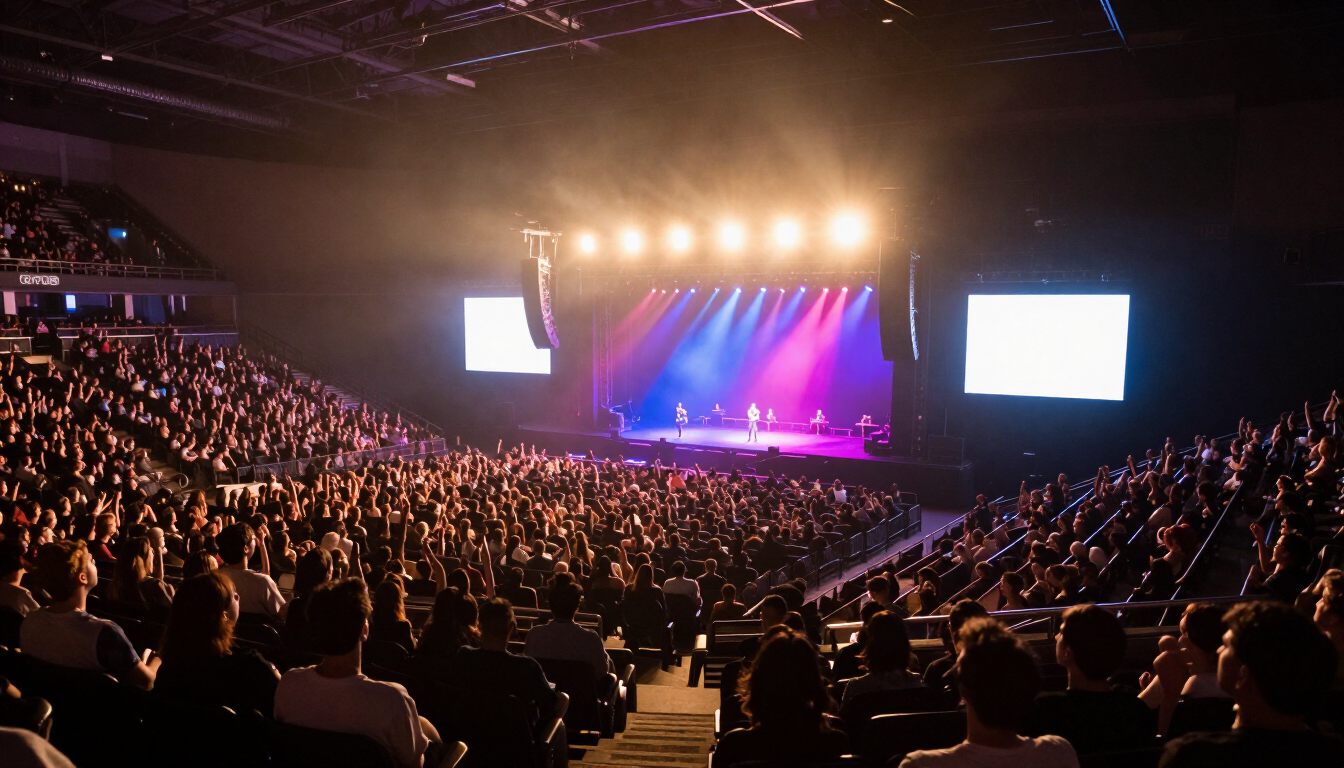
Arena concerts occupy a specific space in the live music world. They are large enough to justify the massive sound system rigs, lighting arrays and elaborate staging that touring acts bring on the road, yet compact enough that most seats still feel connected to the performance. Arena concerts typically hold between 10,000 and 25,000 people, depending on configuration.
For comparison, MetLife Stadium can hold up to 82,500 fans for concerts, while Citizens Bank Park holds over 40,000 for concerts. On the smaller end, the Beacon Theatre is an intimate venue that seats under 3,000, and Radio City Music Hall has a capacity of 5,960 seats. Outdoor amphitheaters like Hollywood Bowl — a historic venue with outdoor seating designed for large-scale outdoor concerts — and the Freedom Mortgage Pavilion with a capacity of 25,000 blur the line further. Arenas land right in the middle: big enough for spectacle, small enough that you can still read the artist's expression from many seats.
Arena concerts are characterized by high production value and elaborate staging. In recent years, arenas have further improved their high-tech stage productions with updated lighting, video and operational systems, while still often featuring multiple seating levels. Controlled acoustics are designed for sound reflection in arenas, which means less wind interference and weather disruption than stadiums or outdoor amphitheaters with lawn seating. That said, arenas can vary in acoustics depending on seating location and production setup — upper bowl corners may catch more echo, while lower sections receive more direct sound. Arena concerts offer a blend of intimate interactions and large-scale productions that neither stadiums nor intimate clubs can replicate.
Seating arrangements in arenas can change based on event layouts such as end-stage or center-stage formats. This variability matters more than most concertgoers expect, and major arenas like Madison Square Garden, T-Mobile Arena in Las Vegas, Kaseya Center in Miami and Bridgestone Arena in Nashville each handle these zones differently.
Here is how capacity and experience compare across common music venue types:
| Venue type | Example | Capacity | Experience |
|---|---|---|---|
| NFL Stadium | Reliant Stadium (Houston) | 72,220 | Massive crowd, long walks, screens essential for sightlines |
| NFL Stadium | SoFi Stadium (Los Angeles) | ~70,240 | Semi-roofed, major concerts and world events |
| NBA Arena | Toyota Center (Houston) | ~19,000 | Lower-bowl center seats deliver the best sound quality |
| Large Arena | Madison Square Garden (New York City) | 20,789 | Floor and lower-bowl seats wrap tightly around the stage |
| Amphitheater | Cynthia Woods Mitchell Pavilion (north of Houston) | 16,500 total (6,500 covered, 10,000 lawn) | Covered seating plus lawn with strong views from multiple angles |
| Mid-size Hall | 713 Music Hall (Houston) | 5,000 | Modern room for hip hop, indie, folk, blues and comedy |
| Small Club | White Oak Music Hall (near northside Houston) | ~1,500–3,000 | Intimate experience for live music |
| Theater | Smart Financial Centre (Sugar Land, Texas) | ~6,400 | Fine sightlines and consistent sound from most seats |
Structure
Common Arena Layout Zones
The venue-specific guides linked throughout this hub break down which sections deliver in each building. Before you dig into a single arena, it helps to understand the zones that repeat across almost every one of them.
Floor
General admission standing room or seated rows closest to the stage. Highest energy, least comfort.
Lower bowl (100-level)
Elevated, angled toward stage. Often the sweet spot for sound and visuals.
Club / suite level
Premium amenities, dedicated food service, private space. Costs more but adds comfort.
Upper bowl
Budget-friendly seats with a full-stage perspective. Steeper angle, more distance.
Suites and VIP
Enclosed or semi-enclosed rooms with dedicated service, best for groups prioritizing comfort over proximity.
Directory
Featured Arena Venue Guides
This section highlights marquee concert venues where Vewtopia has dedicated planning pages. Each guide covers seating sections, neighborhood logistics, transit and the specific energy that defines a show night at that arena. Modern arenas often feature elaborate audio-visual setups and premium VIP clubs, and each venue below brings its own character to the experience.
New York City
Madison Square Garden
Best for: Fans who want tight lower- and upper-bowl sightlines and direct transit access via Penn Station.
Capacity of 20,789 seats. One of the most storied music venues in the world, from Billy Joel to arena-headlining rock and country acts.
View venue guideLas Vegas, Nevada
T-Mobile Arena
Best for: Fans who want Vegas spectacle with restaurants, bars and hotels within a short Strip walk.
Anchors The Park district on the Strip. Built for concerts and events from the ground up.
View venue guideMiami, Florida
Kaseya Center
Best for: Fans who want waterfront dining and Metromover access to a downtown Biscayne Bay arena.
Concert capacity ranges from roughly 12,000 to over 18,000 depending on stage format.
View venue guideNashville, Tennessee
Bridgestone Arena
Best for: Fans who want to walk from dinner on Lower Broadway straight to a downtown arena show.
Capacity swings from about 10,000 for half-house shows to 20,000 for center-stage configurations.
View venue guideMadison Square Garden, New York City — Madison Square Garden has a capacity of 20,789 seats and a reputation as one of the most storied music venues in the world. Artists from Billy Joel to arena-headlining rock and country acts treat MSG as a career milestone. Lower and upper bowl seating wraps tightly around the stage, and the building sits directly above Penn Station for easy transit access. Read the full Madison Square Garden arena concert seating tips for section-by-section guidance.
T-Mobile Arena, Las Vegas — Vegas spectacle meets touring production in a building designed for concerts and events from the ground up. The arena anchors The Park district on the Strip, surrounded by restaurants, bars and hotels within a short walk. Explore the complete T-Mobile Arena Las Vegas concert venue guide for night-of logistics and seat picks.
Kaseya Center, Miami — Sitting on Biscayne Bay with a waterfront edge, Kaseya Center's concert capacity ranges from roughly 12,000 to over 18,000 depending on stage format. The Miami setting means warm-weather arrivals and a downtown scene for post-show food. Open the Kaseya Center Miami arena concert guide for parking, Metromover details and section recommendations.
Bridgestone Arena, Nashville — Nashville's premier arena hosts everything from country headliners and singer songwriters to hip hop and indie touring acts. Capacity swings from about 10,000 for half-house shows to 20,000 for center-stage configurations. Its downtown location puts you steps from Lower Broadway's honky-tonks and live music bars. See the full Bridgestone Arena Nashville concert guide for neighborhood planning and seat advice.
A dynamic card component surfaces popular and recently updated arena venue guides above, displaying each guide's photo, city, "best for" summary and upcoming concert-season notes. This hub connects to the broader arena concert travel guide, which covers step-by-step planning across all cities and venues.
Disclosure
Affiliate and Ticket Notes
VewTopia may earn a commission if you book through links on this page, at no extra cost to you.
Vewtopia may earn a commission from partner links on this page. Our recommendations remain independent, and affiliate relationships do not influence which venues, seats or strategies we suggest.
When buying event tickets for arena concerts, start with the official box office or the venue's authorized primary seller. Buy tickets directly from official venue websites whenever possible. Avoid purchasing from unauthorized resale sites, and check for secure payment options when buying tickets online before entering payment details.
A few practical tips for safer ticket buying
- Purchase tickets early to avoid sellouts and high prices, especially for weekend shows in major cities or tours with limited dates.
- Cross-check the seat location on the official seating chart before completing any purchase. Section numbers and row labels can differ between marketplaces and the venue's own map.
- Be cautious of prices that seem drastically below market — these often signal transfer issues or fraudulent listings.
- Confirm the ticket transfer or mobile entry policy for your specific venue and show, since some arenas restrict how tickets can be forwarded.
Venue-specific guide pages may include contextual ticket or hotel affiliate modules after core editorial guidance. This page focuses on planning strategy.
Lodging
Hotel Location Strategy
Arena concert hotel planning comes down to tradeoffs: price vs. proximity, nightlife access vs. quiet sleep, and walkability vs. easy highway or airport access. There is no universal best answer — it depends on the city, the show night, and how much non-concert time you have.
Common strategies that apply across most arena cities
- Walking-distance downtown hotels: Eliminate rideshare surge and parking stress. Best if you want to grab dinner nearby, walk to the arena and stumble back without coordination. Expect higher rates on event nights.
- Transit-accessible neighborhoods: Slightly farther but often 30\u201350% cheaper. Works well in cities like NYC, where a subway ride from a less central neighborhood takes minutes.
- Airport-area stays: Practical for fly-in, fly-out trips — especially if you arrive the day of the show and leave the next morning. Less atmosphere, more efficiency.
- Resort or Strip-adjacent bases (Las Vegas): In Vegas, staying on the Strip near T-Mobile Arena means walking to the show and having the full night of restaurants, bars and entertainment afterward.
City-specific examples
- NYC: Midtown West puts you within blocks of Madison Square Garden. Quieter options in Hell's Kitchen or Chelsea still keep you in walking range.
- Miami: Brickell or downtown hotels are closest to Kaseya Center and offer waterfront dining. Beachfront stays in South Beach add a rideshare leg.
- Nashville: Lower Broadway hotels drop you onto the street with the arena, but expect noise and crowds. Midtown Nashville is calmer with a quick ride to Bridgestone.
- Las Vegas: Strip hotels near Park MGM or the Aria area minimize walking to T-Mobile Arena. Off-Strip options save money but require a cab or rideshare.
Hotel loyalty programs with flexible cancellation help when tour dates shift or set times change. Always confirm current policies and rates directly with the property — arena event nights can inflate pricing without warning.
Show day
Arrival and Entry
Smooth entry can add an hour of enjoyment to your night. Poor planning — wrong bag, dead phone, bad timing — can mean missing the opener or worse.
A typical arena concert timeline includes doors opening 60 to 90 minutes before the first act. Security screening at arenas usually includes metal detectors and bag inspections. Lines move faster in the first 30 minutes after doors open and spike again 15\u201320 minutes before showtime.
Arrival timing rules of thumb
- Manhattan weeknight at MSG: Allow 45\u201360 minutes for transit delays plus security. Rush hour traffic compounds everything.
- Vegas weekend at T-Mobile Arena: Strip pedestrian traffic adds time. Arrive at least 45 minutes early.
- Miami: Downtown traffic near Kaseya Center peaks around 6\u20137 PM. Budget extra time if driving.
- Nashville: If a Predators game or Broadway event overlaps, expect heavier street congestion near Bridgestone Arena.
Entry prep
- Check bag policies before attending concerts to save time at security. Read venue policies on bag restrictions before attending — most arenas cap bag size around 12\u00d76\u00d712 inches or smaller.
- Have your mobile ticket loaded and screen brightness up before joining the line. Keep a screenshot as backup in case the app fails.
- Bring a valid photo ID. Some venues and events require it for ticket verification or age-restricted areas.
For groups, families and solo travelers
- Agree on a meeting point inside the venue (a specific concourse section or food stand) rather than trying to coordinate outside in a crowd.
- If someone is delayed, the ticket holder can often enter independently while others catch up — just confirm the arena's policy on separate entry.
Merchandise lines are often shorter when doors first open at arenas, so early arrival pays off if you want tour gear without a long wait. General Admission tickets may require long pre-show lineups for better positioning on the floor — some fans queue hours in advance for major acts.
Seat picks
Seating Tips, Best Seats, and Best-Value Sections
Choosing seats in an arena is less about finding the "perfect" spot and more about matching the seat to the kind of night you want. Here are the main seating zones and what each delivers.
Floor (GA or seated)
Floor standing at arena shows is most immersive for high-energy performances — think hip hop, pop or EDM where crowd energy on the first floor matters more than a clean view. Standing room means limited access to restrooms and food without losing your spot. Not ideal if comfort is a priority.
Lower bowl (100-level)
The lower bowl often provides the best sound and visual balance at arena concerts. You sit above the crowd, angled toward the stage, with direct sight lines to screens and lighting. At MSG, lower bowl sections 101\u2013119 offer best sightlines. Similar patterns hold at most arenas — center and slightly off-center lower bowl sections outperform extreme corners.
Club / suite level
Premium pricing, but you gain a full bar, comfortable seats and often exclusive food service. Best for guests who want a relaxed experience with a clear view.
Upper bowl
Budget-friendly and underrated for visually elaborate shows — you see the full stage picture, all the lighting and every screen. The tradeoff is distance and steeper steps. Choose side or center upper sections over extreme corners. Front rows of the upper deck often deliver surprisingly strong value.
Seat-choice scenarios at a glance
| Priority | Best zone | Why |
|---|---|---|
| Budget | Upper bowl, center or side | Full stage view, lowest price |
| Mid-range value | Lower bowl side | Sound and visual balance |
| Comfort + amenities | Club or suite level | Private space, food, full bar |
| Maximum energy | Floor GA / standing room | Closest to stage, immersive |
For reference, front mezzanine center often outperforms orchestra level seating at theaters, and at stadiums, lower bowl 20\u201340 rows up provides the best view. Arenas split the difference — lower bowl side seats angled toward the stage reliably deliver across venues. Madison Square Garden has a capacity of 20,789 seats spread across these zones, and each arena's guide page breaks down exact section numbers. Check the venue-specific pages linked above for the building you are visiting.
Off the clock
Food and Things to Do Nearby
Arena concerts work best as the centerpiece of a full night out. Where you eat and what you do before and after the show shapes the experience as much as the seats you sit in.
Inside the arena
Many arenas serve diverse food options including pizza, burgers and hot dogs at quick-service stands. Some venues host local restaurant outposts or dedicated spaces where guests can order food and drinks with table service. Quality varies — expect convenience pricing and variable wait times, especially near showtime.
Pre- and post-show neighborhoods
- NYC (Madison Square Garden): Hell's Kitchen serves food from dozens of cuisines within a few blocks. K-Town on 32nd Street is open late. Nearby, Radio City Music Hall seats 5,960 and features Art Deco design — worth a walk past even if you are not attending a show there.
- Las Vegas (T-Mobile Arena): The Park district and the Strip offer restaurants and bars for dinner before the show. Late-night options run all week in Vegas.
- Miami (Kaseya Center): Brickell and Bayside Marketplace have waterfront dining. Post-show, Wynwood's bars stay open late during the summer months.
- Nashville (Bridgestone Arena): Lower Broadway honky-tonks feature live music from tribute bands, folk and country acts, and rock bands playing late into the night. You can grab dinner at restaurants on the street and walk to the arena in minutes.
Planning your evening
- Fast-casual dinner before the show, then drinks at nearby bars after, keeps the night flexible.
- Sit-down dinner works if you book early enough (5:00\u20136:00 PM for an 8:00 PM show) and the restaurant is a short walk from the arena.
- Post-show late-night food is easiest in cities like Vegas and Nashville, where restaurants and bars stay open past midnight all week.
Confirm hours and reservation needs before show day — arena events shift neighborhood traffic patterns and some places fill earlier than expected.
Planning ahead
Accessibility
Accessibility planning should start before you purchase tickets. Arenas differ in wheelchair seating locations, companion seat policies and services for guests with disabilities — and these details can affect which sections are even available to you.
Key accessibility features to look for on each venue's site
- Accessible seating maps with wheelchair spaces and companion seats
- ADA parking areas and curbside drop-off zones (Kaseya Center designates Gate 3 for accessible drop-off with elevator access)
- Elevator and escalator access to all levels
- Assistive listening devices, captioning services and service animal policies
Booking tips
- Contact the box office directly for accessible tickets. Official ticketing channels are more reliable than resale for confirming exact accessible locations.
- Ask about the view from accessible sections. Some are positioned with excellent sight lines; others may face obstructions depending on stage configuration.
Hidden considerations
- Upper bowl sections often require steep stairs that can be challenging for some guests. Lower bowl or concourse-level sections reduce vertical travel.
- Long concourse distances in large arenas add time between entry and seat. Budget extra minutes.
- Standing room and GA floor areas may be difficult to navigate for mobility-device users.
Accessibility also extends to transit. Look for step-free routing at subway or rail stations, curbside pickup zones for rideshare, and additional time for elevator use and security lines. Venue and transit official pages are the final word on current accessibility policies. Vewtopia's venue guides aim to summarize these resources and flag tradeoffs, not replace them.
Checklist
Safety, Comfort, and Packing for Arena Shows
A short checklist for what to bring, what to wear and how to stay comfortable at packed arena concerts.
Clothing and footwear
- Wear comfortable, closed-toe shoes. You will climb stairs, stand for extended periods and navigate crowded concourses.
- Arenas run cold — air conditioning can be aggressive even in summer. Bring a light layer you can tie around your waist or stuff in a small bag.
Packing list (aligned with most arena rules)
- Small bag that meets the venue's clear bag policy (many arenas require clear bags no larger than 12\u00d76\u00d712 inches)
- Phone with charged battery and loaded mobile ticket
- Portable charger (allowed at most venues)
- Photo ID and payment method (card or mobile pay)
- Earplugs — especially for floor and lower bowl seats near speakers
- Any required medical items (check venue policy for allowed exceptions)
Personal safety
- Agree on a meeting point with your group in case you get separated.
- Keep valuables minimal — leave anything you would not want in a dense crowd at the hotel.
- On the floor, be aware of crowd surges during high-energy performances. Wear stable shoes and stay hydrated.
- Follow staff directions during any emergency or evacuation announcement.
Etiquette that protects your night
- Respect the sight lines of people behind you — sit when others sit, avoid excessive overhead filming.
- Manage drinks responsibly; spills on a crowded floor create slip hazards for everyone.
- Keep personal space in mind, especially in standing room areas.
By city
Planning Arena Concert Trips by City
Planning shifts depending on the city. What works in Manhattan might not apply in Nashville or Miami.
- New York City (Madison Square Garden): Transit-first city. The subway and commuter rail at Penn Station make driving unnecessary for most visitors. Expect high hotel rates near MSG, but the surrounding space — from Hudson Yards to Times Square — gives you a world of pre-show options. Rolling Stones at MSG or a weeknight rock show both draw heavy crowds; plan dinner early.
- Las Vegas (T-Mobile Arena): The arena sits on the Strip, so your night extends naturally into Vegas entertainment. Hotel options within walking distance are plentiful. Summer shows mean extreme heat on the walk in. T-Mobile Arena enforces a no re-entry policy, so plan accordingly.
- Miami (Kaseya Center): Waterfront downtown location. Metrorail and Metromover handle transit, but late-show endings sometimes outlast service hours. Brickell hotels keep you close. Acts playing Kaseya range from Latin music to hip hop to arena pop — Keith Sweat or Boyz II Men R&B events fill the building with a specific energy distinct from rock or country tours.
- Nashville (Bridgestone Arena): Downtown arena surrounded by live music at every turn. Indie, folk and country shows dominate the calendar, but Bridgestone hosts rock and pop acts regularly. Overlapping Predators games or CMA week events can strain parking and hotel availability. Check local event calendars before booking.
If you are following an artist on a multi-city tour, compare hotel and transit strategies between destinations rather than assuming one approach fits every stop.
How to use this hub
Using Vewtopia Arena Venue Guides
Vewtopia's individual arena venue guides are designed as planning tools you open before you buy tickets, book a hotel or decide how to get to the show.
Each guide follows a consistent structure
- Overview: Arena character, capacity and what kind of acts typically play there
- Seating breakdown: Best sections for different budgets and priorities
- Neighborhood intel: Where to eat, drink and spend time before and after the show
- Transit and arrival: How to get there, where to park or get dropped off, and when to arrive
- Policies: Bag rules, re-entry and accessibility details specific to that building
How to use the guides effectively
- Start with the general arena concert travel guide for a zoomed-out planning framework.
- Open the venue page for your specific arena to fine-tune seat picks and logistics.
- Cross-check Vewtopia's recommendations against the official venue site for final, up-to-date policies.
Dynamic cards on this page surface popular and recently updated arena venue guides, helping you jump directly to the most relevant content for your next tour or city visit.
Questions
FAQ
These answers address common arena concert travel questions that come up during planning.
When should I buy tickets for an arena concert?
Most arena tours follow a pattern: fan club or credit card presales open first, followed by general on-sale. Purchase tickets early to avoid sellouts and high prices, especially for weekend dates in major cities. For less in-demand shows, resale prices sometimes drop closer to the event, but availability and pricing are never guaranteed. Always cross-check seat locations on the official seating chart before completing any purchase.
How early should I arrive for an arena concert?
Plan to arrive 30–45 minutes before the opener for a relaxed entry. If you have GA floor tickets, arriving earlier helps with positioning. Big cities and weeknight rush hours often require extra buffer time for transit and security. Check the venue's official event page on show day for any updated door times.
Are arena upper-bowl seats worth it?
Upper bowl seats trade proximity for a full-stage perspective and lower prices. They work well for visually grand shows with elaborate lighting and screens. The best seats in the upper deck are center or side sections — avoid extreme corners where angles compress the stage. For heavily production-driven tours, slightly more expensive lower-bowl side seats may be a better value if budget allows.
Is it better to stay near the arena or in a central neighborhood?
Walking-distance hotels eliminate post-show transit stress but come with event-night noise and higher rates. Central neighborhoods a short transit ride away often offer better dining, daytime activities and lower prices. In New York City, Midtown West versus other neighborhoods is a common tradeoff. In Nashville, Lower Broadway puts you at the door but Midtown is quieter. Decide based on how much non-concert time you have in the city.
What if the arena changes the show layout or policies?
Arenas and tours can shift stage layouts, add camera platforms, or adjust policies on bags, entry times and health requirements with little notice, and some arenas have updated these details in recent years. Check the official event page and venue app notifications in the final 24–48 hours before the show. Vewtopia guides provide stable strategy — last-minute specifics always come from the venue and promoter.
Official sources
- Madison Square Garden — msg.com — seating charts, policies, event details
- T-Mobile Arena Las Vegas — t-mobilearena.com — A-Z guide, parking, policies
- Kaseya Center Miami — kaseyacenter.com — directions, parking, accessibility
- Bridgestone Arena Nashville — bridgestonearena.com — event calendar, seating, policies
- MTA (NYC transit) — mta.info — subway and commuter rail schedules
- Miami-Dade Transit — miamidade.gov/transit — Metrorail and Metromover routes
- Tour and artist official pages are the authority for show dates, on-sale timing and special entry requirements.
All operational details should be verified against these sources shortly before your show date.
Last verified: July 2026
Verify all venue policies, transit schedules and parking details against official sources before publication.