
Start here
Key Takeaways
- Most Miami festivals cluster around Downtown Miami, Bayfront Park, Kaseya Center, and Hard Rock Stadium. Public transit, rideshare, and driving all work if you plan ahead.
- Miami International Airport (MIA) is usually the best pick for festival-goers heading Downtown or to Brickell. Fort Lauderdale (FLL) is a strong backup for cheaper flights or Brightline access.
- Metrorail plus the free Metromover form the core budget strategy for Downtown and Bayfront Park events. Using public transit helps avoid the high parking fees and limited availability at festival locations.
- For late-night stadium shows, rideshare plus park-and-ride is often the safer choice since rail service hours are finite.
- Always set a post-event pickup plan, check last train times, and leave extra time. Traffic congestion is typically heaviest during evenings on weekends and around festival opening and closing times.
This guide is independent trip-planning research, not an official festival or transit resource. Schedules, fares, and parking prices change, so confirm current details with official sources before your travel dates.
At a glance
Planning Snapshot
- Event zones: Downtown Miami and Bayfront Park along Biscayne Bay for festivals and fan fests, the Miami Beach club and South Beach hotels strip for after-parties, Hard Rock Stadium up in Miami Gardens for major concerts and matches, and Kaseya Center on Biscayne Boulevard for arena shows.
- Transportation modes: Combine two or three modes rather than expecting a single perfect option. Metrorail to Government Center, then Metromover to Bayfront Park for a downtown festival, or park-and-ride at a suburban station plus rideshare for the return trip, both work well.
- Timing considerations: Festival timing shapes everything. Multi-day events run late, often past midnight on Saturday nights, with after-parties stretching into Wynwood, Brickell, and South Beach until dawn.
- Scale: Over 165,000 fans attend Ultra Music Festival each year, and navigating transportation during major Miami festivals requires planning to mitigate traffic congestion. Expect road closures, increased transit demand, and limited parking availability during events.
Reference
Quick Facts
- Festival venues: Bayfront Park and Downtown Miami, Kaseya Center at 601 Biscayne Boulevard, Hard Rock Stadium in Miami Gardens.
- Airports: Miami International Airport (MIA) closest to Downtown; Fort Lauderdale-Hollywood International (FLL) as a cheaper-flight backup with Brightline access.
- Transit options: Metrorail ($2.25 per ride), free Metromover (three loops, 21 stations), Metrobus, Tri-Rail, Brightline, bike and scooter share.
- Parking: Downtown garages run $100+ per event day; Hard Rock Stadium lots range $40-250 depending on tier and demand.
- Timing: Metrorail service extends to 1 a.m. on select festival and World Cup dates; always verify last train times before you travel.
Overview
Trip-Planning Overview for Downtown Miami
This guide is a practical resource for anyone heading to Miami for an Ultra weekend, a stadium concert, a fan fest at Bayfront Park, or a multi-venue music trip across Miami-Dade County. No hype, just usable logistics you can act on before you land.
The key event zones you need to know: Downtown Miami and Bayfront Park along Biscayne Bay for festivals and fan fests, the Miami Beach club and South Beach hotels strip for after-parties, Hard Rock Stadium up in Miami Gardens for major concerts and matches, and Kaseya Center on Biscayne Boulevard for arena shows. Pairing this guide with Vewtopia's Miami destination guide gives you fuller neighborhood and hotel context beyond the transportation logistics covered here.
The Miami public transit system includes Metrorail, Metromover, Metrobus, and bike-sharing services. This guide covers all of them alongside rideshare, taxis, driving, parking, and group logistics. Public transit is often the most practical way to avoid heavy traffic during major Miami festivals, and we recommend combining two or three modes rather than expecting a single perfect option for the entire weekend.
Airports
MIA vs. FLL
Both Miami International Airport (MIA) and Fort Lauderdale-Hollywood International (FLL) work for festival travel. Each involves different tradeoffs for cost, time, and convenience, so the right pick depends on your budget and where you're staying.
MIA sits closest to Downtown Miami and Brickell. It connects directly to the Metrorail system via the Miami Intermodal Center (MIC), making it easy to reach Government Center, Coral Gables, and Doral without a car. If your festival venue is Bayfront Park or Kaseya Center, MIA is almost always the faster choice.
FLL often has cheaper flights, especially from budget carriers. It connects well via Brightline to MiamiCentral Station in Downtown, but adds an extra transfer for most Miami Beach and Downtown festival stays. Choose MIA for tight schedules, downtown-based music weekends, or if you want the simplest rail connection to the urban core. Choose FLL when airfare savings matter, you're staying in Fort Lauderdale, or you plan to ride Brightline south into Miami-Dade.
Plan at least one extra connection when coming from FLL to Miami Beach via Brightline or Tri-Rail plus Metrorail. Both airports get busy on major Miami music weekends, so factor extra time for baggage and ground transport queues, especially during summer thunderstorm season.
Rail
Metrorail and Metromover
Metrorail and the free Metromover are the backbone of budget-friendly Miami festival transportation, especially for Downtown and Bayfront Park events. Together they can carry you from the airport to the festival gates without ever needing a car.
Metrorail is an elevated rail running from South Miami and Dadeland through the Downtown core to Miami International Airport and northern suburbs. Key festival-useful Metrorail stations include Miami Airport (via the Orange Line), Earlington Heights, Government Center, Brickell, and Culmer. A single ride costs approximately $2.25.
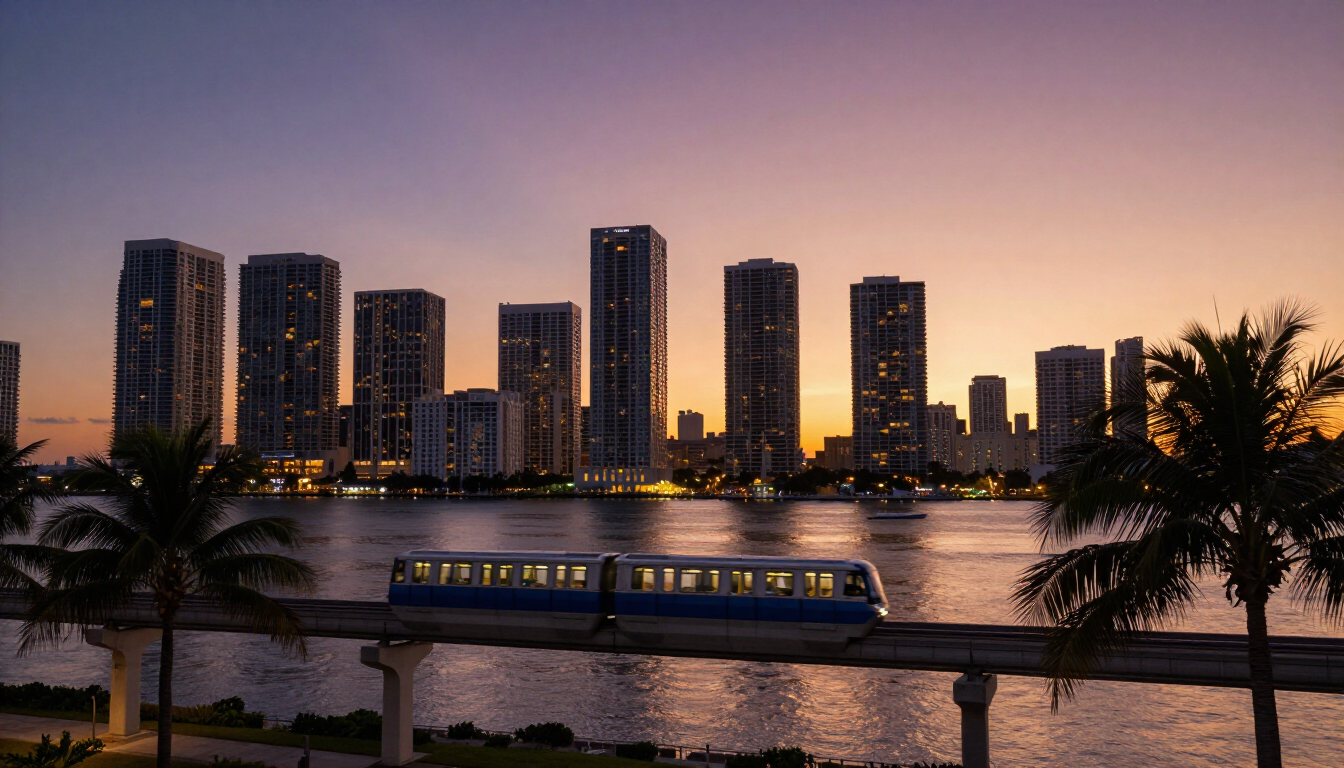
Metromover is a free service connecting Downtown Miami and Bayfront Park. It runs three loops, Brickell, Inner, and Omni, with 21 stations across the Downtown area. For festival-goers, the Inner Loop from Government Center to the Bayfront Park Metromover station is the most direct route.
The classic festival route: MIA to Metrorail Orange Line to Government Center to Metromover Inner Loop to Bayfront Park station. Total fare: one Metrorail ride. Total walking: minimal. If you want predictable, car-free trips to downtown shows, stay near a Metrorail station; areas like Coral Gables, Dadeland, Brickell, or South Miami all work.
Public transit often runs extended hours during major festivals to accommodate attendees' travel needs. Metrorail runs until 1 a.m. on select World Cup dates, and service extends to 1 a.m. on select festival dates. Always verify last train times on the official Miami-Dade Transit site before your festival days. Post-festival crowds at Government Center can be intense, so let one or two packed trains pass, or walk a short distance to the next station before boarding.
Behind the wheel
Driving and Parking
Driving gives you control, but it also means dealing with Miami traffic, expensive parking, and strict enforcement around major venues. Each event zone has its own parking personality worth understanding before you commit to a car.
Downtown Miami and Bayfront Park: one-way streets, Biscayne Boulevard closures, and limited street parking make driving stressful during festival hours. Parking structures near Bayfront Park charge $100+ per day during large events, and public lots further from the venue require long walks. Parking availability is extremely limited during major events, so pre-booking a garage in Brickell or the Omni area is worth the effort.
Hard Rock Stadium: official parking lots are color-coded, with outer lots running $40-60 and premium inner lots or VIP spaces reaching $80-250 depending on event demand. Pre-paid parking passes are strongly recommended via the Hard Rock Stadium guide, which covers lot maps and pass tiers in more detail.
Miami Beach: causeway bottlenecks on the MacArthur, Venetian, and Julia Tuttle can add serious time. Many visitors park once at their South Beach hotels and use other modes all weekend. Street closures begin days before events like Ultra Music Festival, so check temporary signage carefully. Don't leave visible valuables in the car, and use lit, attended garages when possible.
Get there
Hard Rock Stadium, Kaseya Center and Bayfront Park Routes
Miami's big music and sports venues sit in different parts of Miami-Dade County, so your ideal route depends on where you're staying. Many large events provide dedicated shuttle buses from hotels or transit stations for convenience, so check your event's official page for current options.
Hard Rock Stadium (Miami Gardens): about 16 miles north of Downtown with no direct rail access. Drive via I-95 or Florida Turnpike, or approach Miami Gardens from NW 199th Street. Rideshare drop-off zones exist but expect long waits post-show, since over 27,000 vehicles converge on the area during sold-out events. Consider parking at a transit hub and ridesharing the final leg to avoid exit gridlock. See the Hard Rock Stadium guide for updated lot maps.
Kaseya Center (Downtown): located at 601 Biscayne Boulevard, just a short walk from the Bayfront Park Metromover station. Take Metrorail to Government Center, transfer to the Omni Loop, and exit at Park West Station. Rideshare staging works best around Bayside Marketplace, with designated drop-off near Gate 6 and taxis queuing at Gate 3. Full details are on the Kaseya Center page.
Bayfront Park: the classic route is Government Center to Metromover Inner Loop to Bayfront Park station. From MiamiCentral Station (Brightline/Tri-Rail), it's a short walk or one Metromover stop. Driving is difficult during festival days due to road closures, and rideshare from Miami Beach via the MacArthur Causeway works but requires extra time. See the Bayfront Park venue guide for gate-specific details. Map your specific hotel, whether Brickell, Coral Gables, South Beach, Wynwood, or Doral, to each venue in advance and save both daytime and late-night route options.
Landing
Airport Arrival
Landing at Miami International Airport on a Thursday or Friday before a festival weekend means crowded terminals and busy ground transportation zones. Budget extra time, especially for international arrivals clearing customs.
At MIA, follow signs from baggage claim to the MIA Mover, a free automated train that takes you to the Miami Intermodal Center. From there, choose between Metrorail (Orange Line toward Downtown), Tri-Rail, rental cars, hotel shuttles, or rideshare pick-up zones. Metered taxis from MIA to Downtown run around $27.
At FLL, head to ground transportation and connect to the Brightline Fort Lauderdale station or Tri-Rail via airport shuttle or taxi, then ride south into Miami-Dade. This adds one extra transfer compared to MIA.
First-night strategy: go straight to your hotel to drop luggage, then head to the festival site. If you arrive early, many Downtown hotels hold bags so you can explore with a light daypack. Pack your festival gear in an easy-access bag for quick transitions, and check updated airport transit maps on arrival since ground transportation pickup locations and construction detours shift year to year.
Beyond rail
Public Transportation
Beyond Metrorail and Metromover, South Florida offers a broader public transit mix worth knowing for festival weekends. Metrobus and express bus routes connect outer neighborhoods and park-and-ride lots to Downtown and major venues, which is useful if your hotel is outside the rail corridor. The GO Miami-Dade Transit app provides real-time tracking information for public transportation across all bus and rail services.
Tri-Rail is a commuter rail serving Miami-Dade, Broward, and Palm Beach counties. If you're staying in Fort Lauderdale or West Palm Beach and coming to Miami for a single festival day, Tri-Rail offers an affordable option, with weekend event fares as low as $5 round-trip. Fans traveling from Boca Raton or further north can connect at MiamiCentral Station via the Downtown Miami Link, operational since January 2024.
Brightline connects Miami to Orlando with multiple stops including West Palm Beach, Boca Raton, Fort Lauderdale, and Aventura. From MiamiCentral Station, Bayfront Park is within walking distance or one Metromover hop. Local trolleys in Miami Beach, Coral Gables, and other neighborhoods, plus bike and scooter share programs, fill the last-mile gap; biking or walking can be quicker than driving for short distances during festivals in downtown areas, especially along Biscayne Boulevard or Brickell Avenue.
Check real-time updates via official apps for schedule changes, extended hours during World Cup-style events, or special shuttles for major music weekends. For a broader framework on sequencing tickets, flights, and lodging together, Vewtopia's guides hub covers general trip-planning steps that apply across most festival trips.
Event-specific tactics
Driving and Parking (Ultra Music Festival-Specific Tactics)
This section focuses on event-specific tactics for big festival and concert nights rather than general driving advice.
Park-and-ride is one of the smartest moves during festival days. Park at a Metrorail station garage, Dadeland South, South Miami, or College North, then take rail into Downtown to avoid congestion and high downtown rates. Garages at these suburban stations are far cheaper than anything near the festival venue.
Vehicle staging for groups: drop everyone near a transit hub or the festival gates, then have the driver park further away in a less crowded garage. Reunite via a pre-agreed pickup point after the show.
Hard Rock Stadium passes sell out in advance for high-demand events. During the 2026 World Cup, official parking passes reached $175-250 for premium lots. Relying on cash-at-the-lot is risky for major shows, and the stadium has over 26,000 parking spaces on regular game days, but demand for concerts and international matches often exceeds supply.
For multi-venue weekends, Kaseya Center one night, a Bayfront Park fan fest another, Hard Rock for a tour stop, pick a central-area hotel in Brickell or Downtown to limit daily driving time. Towing and ticketing are aggressive around major events. Read temporary signage carefully and watch for resident-only zones in Miami Beach and surrounding neighborhoods, since plans change quickly during festival weekends.
Getting home
Post-Event Pickup Plan
Your plan for getting home after the festival ends is often more important than how you get there. Fatigue, crowds, and limited late-night options all stack up quickly.
Common patterns when a festival ends: thousands of people leaving Bayfront Park or Hard Rock Stadium at once, intermittent cell coverage, long lines at Metromover and bus stops, and crowded curbside areas along Biscayne Boulevard.
Build a default route and a backup. Default: Metrorail from Government Center if late-night trains are still running, or rideshare from a specific corner two blocks from the venue. Backup: a pre-booked car, taxi queue, or walking to your hotel if you're staying within the urban core.
Staggered departures help. If you must catch the last train, consider an early departure before the final act. If you're flexible, hang back 20-40 minutes inside or near the festival site to let the first crush pass. Set simple meetup rules, such as a backup intersection in Downtown, a particular garage level, or a hotel lobby nearby, so your group can regroup without endless texts. Stick to lit streets, avoid isolated waterfront paths late at night, and follow official security guidance from Miami-Dade County or the festival organizer.
Plan ahead
Accessibility and Group Logistics
Accessible and group-friendly transportation is available in Miami, but planning earlier and coordinating with venues and transit providers makes a significant difference.
ADA-focused transit: all Metromover and Metrorail stations near Bayfront Park and Kaseya Center have elevators. In case of elevator outages, Miami-Dade Transit provides backup accessible service within 30 minutes upon request. Check the latest outage reports on the Miami-Dade Transit site before your trip.
Accessible parking and drop-off: Hard Rock Stadium, Kaseya Center, and Bayfront Park all offer ADA drop-off zones. Kaseya Center's primary accessible entrance is Gate 3 with elevator access, and Gate 4 for VIP and disabled guests. Visit each venue's official accessibility page for current maps.
Group travel: booking a shared van or minibus through a luxury or private transportation provider can make sense for groups. A $600 round-trip transfer divided among six people costs $100 each, often competitive with six individual rideshare fares during surge, and it eliminates surge pricing during peak festival times. Booking luxury transportation should occur six to eight weeks before the festival to lock in availability. For mixed-ability groups, plan shorter walks from stations, allow extra time for security and bag checks at festival gates, and stay flexible with exit times. Most transit systems in Miami-Dade County accept contactless cards and mobile wallets.
Answered
FAQ
What is the best area to stay in for Bayfront Park festivals?
Downtown Miami and Brickell are the most convenient for Bayfront Park and Kaseya Center, thanks to easy Metromover access and short rideshare hops. Downtown hotels put you within walking distance of both venues. Miami Beach works better if nightlife, Ocean Drive, and beach time are your priority, but expect longer return trips after festival hours.
Can I rely only on public transit for a Miami festival weekend?
Many travelers do, especially when staying along Metrorail and Metromover lines. The free Metromover handles most downtown trips. Limitations show up late at night when rail service ends, so pair transit with occasional rideshare after midnight, particularly on nights when the festival ends past the last scheduled return service.
How early should I get to the venue on show days?
Arriving several hours before headliners gives you time to clear security, explore fan fest areas, and avoid peak arrival traffic. Exact timing depends on published door times and lineup, but being at the festival gates well before the main acts is consistently worth it.
Is it realistic to stay in Fort Lauderdale and commute to Miami shows?
It works using Brightline or Tri-Rail plus local transit or rideshare on the Miami end. Factor at least 60-90 minutes each way and avoid scheduling tight turnarounds between late shows and last train departures. This setup is best for fans traveling to a single-day event rather than a multi-day festival.
What should I do if weather disrupts my transportation plan?
Florida storms can be sudden and intense. Check official alerts, give yourself more time in case of heavy rain or lightning delays, and keep flexible options ready. Covered pickup spots, such as hotel lobbies, parking garages, and transit stations, are better than open curbside areas. The GO Miami-Dade Transit app shows real-time service disruptions.
Official sources and update log
This is independent trip-planning guidance, not an official transit or festival resource. Transit schedules, parking pricing, and venue policies should be re-checked against official sources before each major event weekend.
Official sources
- Miami-Dade County Department of Transportation and Public Works — Metromover and Metrorail schedules, fares, accessibility: miamidade.gov
- Miami-Dade Transit press releases — event service extensions: miamidade.gov
- Brightline — schedules and Miami station info: gobrightline.com
- Tri-Rail — commuter rail schedules and event service: tri-rail.com
- Kaseya Center — directions, parking and accessibility: kaseyacenter.com
Affiliate placement notes
No affiliate links are placed on this page. If approved transportation partners, such as Brightline, parking reservation services, or luxury shuttle providers, are confirmed, placements can be added in the MIA vs. FLL section, the Public Transportation section, and the Accessibility and Group Logistics section, with appropriate disclosure language preceding each.
VewTopia may earn a commission if you book through links on this page, at no extra cost to you.
Update log
2026-07: Initial publication covering airports, Metrorail and Metromover, rideshare, driving and parking, venue-specific routes, airport arrival, public transportation, post-event pickup planning, and accessibility and group logistics for Miami's major festival and concert venues.
Last verified: July 20, 2026